
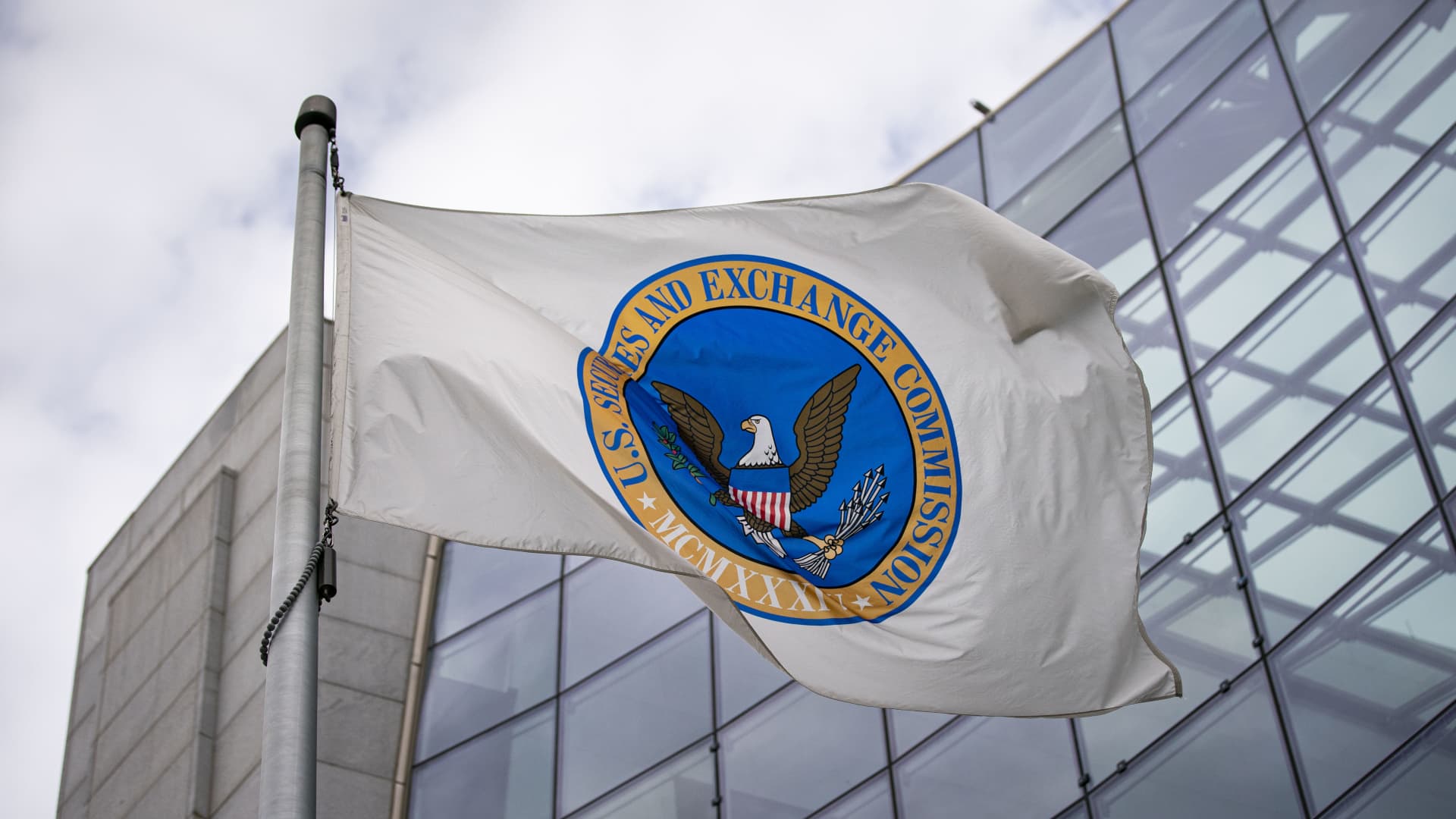

In Washington, a flag flies over the U.S. Securities and Exchange Commission headquarters on February 23, 2022. Regulators in Europe and Asia are pushing for new formal laws for digital currencies in 2023, but the United States has taken some of the harshest legal actions against major players in the industry.
In 2023, the U.S. was among the most active countries in enforcing penalties and legal actions against crypto companies. Authorities have been focused on addressing bad practices in the industry following the collapse of Sam Bankman-Fried’s crypto empire. The SEC, the Commodity Futures Trading Commission, the Department of Justice, and Treasury’s Financial Crimes Enforcement Network have been working in parallel to police the space.
According to Renato Mariotti, a former prosecutor in the U.S. Justice Department’s Securities and Commodities Fraud Section, the U.S. “regulation by enforcement” approach is questionable, as issues that should be determined by legislation or regulation are being instead litigated.
Some countries have a comprehensive regulatory framework that the U.S. is lacking. The SEC, CFTC, and Congress have been active enforcers concerning the regulation of digital assets and cryptocurrencies. The U.S. has been the most punishing of regulators when it comes to penalties and fines for crypto companies.
In 2023, the SEC filed lawsuits against Binance and Coinbase for illegal securities dealing. The SEC has brought over 200 actions related to crypto asset and cyber enforcement since 2014. CoinBase CEO Brian Armstrong condemned the SEC’s actions and considered moving the company’s headquarters overseas.
Crypto participants are hoping for more clarity through new regulations. Alyse Killeen, managing partner of Stillmark Capital, is hoping for clearer regulatory frameworks, which would encourage more widespread participation in the bitcoin market.
Europe looks to apply its Markets in Crypto-Assets legislation to clean up the crypto industry and tackle fraud and money laundering. The European Union seeks to tackle the threat posed by stablecoins and avoid undermining sovereign currencies. Other jurisdictions are also enhancing their regulatory and enforcement frameworks for crypto, and the landscape is rapidly evolving.