
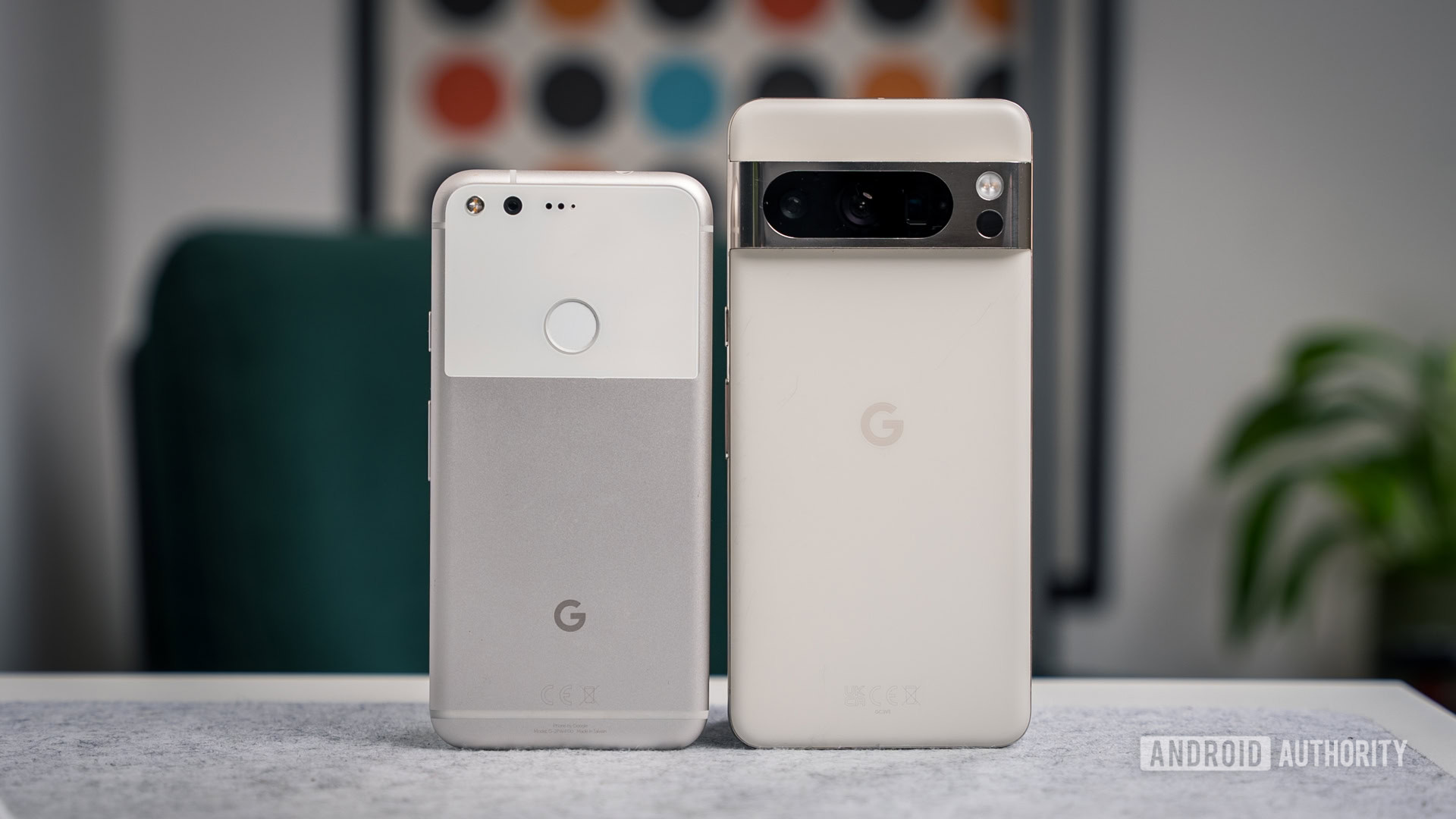

The original Google Pixel launched in 2016 — that’s eight years ago, for those of you who aren’t already suffering an existential crisis. The smartphone industry looked a lot different back then, and it’s safe to say that the Pixel lineup, although still not quite a global force, has been instrumental in shaping the smartphone space as it is today, from flagship powerhouses to bargain budget models.
With the Pixel 9 series fast approaching, it’s time to appreciate just how far the series has come and the effect it’s had on the broader smartphone landscape.
Keeping Android in focus
Google’s bulging product portfolio betrays the fact that it never really set out to be a hardware company. Despite years in the smartphone industry, it originally partnered with bigger Android manufacturers to produce its Nexus series of developer-focussed handsets. 2016’s Google Pixel and Pixel Xl were the brand’s first in-house smartphones, targeted at a mainstream consumer base as a showcase of Google’s vision for Android, which included Google Assistant, a comparatively pared-back Pixel UI interface, and a pledge of faster and more comprehensive update support. The more streamlined software approach was in stark contrast to the historically busy aesthetic of Samsung’s TouchWiz, the feature creep of Xiaomi’s MIUI, and the sluggish trickle of updates passing through OEM and carrier certification processes.
Google never stated that it was irked by some of Android’s protracted software issues, but clearly, the brand felt like it could do some things better than the countless players already building Android smartphones. It had already tried (and was struggling with) software initiatives like Android One. The Google Pixel’s three years of software support isn’t a lot by today’s standards, but it was a whole year or two better than many manufacturers. 2016’s Samsung Galaxy S7 series received just two years of OS support, though security support continued for a little while longer. Google’s Pixel is almost solely responsible for the long-term updates now offered by many Android phones.
Of course, the Pixel series continued to push the boundaries, promising five years of support with the Pixel 6 series, owing to its semi-custom Google Tensor processor. At the time, we were still stuck with just two or three years of updates from other major flagship players. Google extended this to seven years of support with the Pixel 8 handsets, matching Samsung’s pledge. While not everyone has followed suite, it has set the bar and dragged a number of smartphone lines with it in offering much longer and faster software support, at least for the most expensive smartphones.