
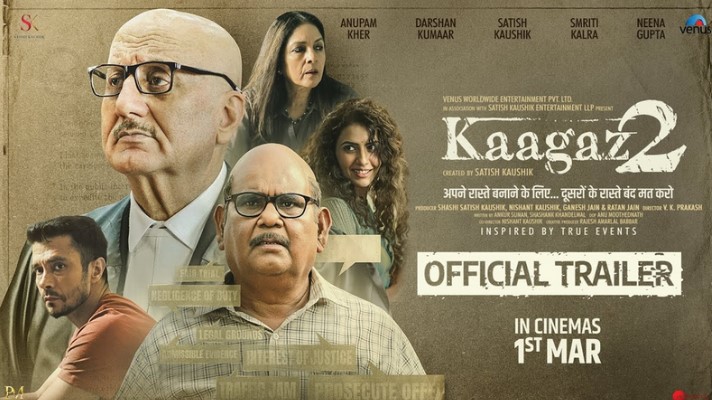

Director: V.K. Prakash
The street has long been considered the prime platform for democracy, until the opposing views gradually started gaining acceptance within the system. Despite the diminishing importance of this assumed democratic right, the concept of a functional democracy remained intact. As the number of “anti-strike” supporters increased, our revered institutions embarked on a historic journey to balance the right to protest with the right to life. Back in 1962, the highest court ruled that even the most liberal interpretation of Article 19(1)(C) did not guarantee trade unions the fundamental right to strike. The pinnacle of street inhibition came in the Indian Bank case, where esteemed jurists declared that the right to strike is not part of the guaranteed fundamental rights.
Director V.K. Prakash challenges this revered theory by critiquing political processions on the streets. In a country known for its patriotism, disciplined nature, well-maintained roads, efficient essential services, and clean governance, discouraging street marches and protests may seem not only timely but also stating the obvious. To give credit to the filmmaker, this narrative at least leaves viewers with food for thought.
“Kaagaz 2” kicks off with a focus on the evergreen theme of Patriotism. We follow young Uday Raj Singh (Darshan Kumaar) along with his friend Satty (Aniruddh Dave) at the Indian Military Academy (IMA), undergoing rigorous training exercises. As we delve into the larger context, the narrative also delves into the familial dynamics of Uday, a reluctant soldier with a strained family background. After his departure from the academy, Uday finds himself in an equally suffocating environment. A call from his estranged father Raj Narayan (Anupam Kher), a wealthy lawyer living apart from his family, sets the stage for the story.
As the plot unfolds, we witness a case handled by Raj Narayan for his client Sushil Rastogi (Satish Kaushik), who has suffered a tragic loss. His daughter’s death due to a delayed hospital arrival caused by a political rally leads to a shift in focus towards the political narrative. The film suggests that politicians are unfairly blamed for societal ills, without a clear target in sight. Uday, grappling with personal demons and a quest for a father figure, gets entangled in the turmoil along with his father.
The storyline navigates through a non-linear trajectory, touching upon the hindrance posed by politicians and bureaucracy alike. The film’s credibility takes a hit as social activists take to the streets to highlight the challenges faced due to political road blockades. The complexities of democracy and the issues plaguing our society are laid bare for examination.
While the film does offer moments of brilliance, including noteworthy performances from the cast, the narrative struggles to make a compelling case. The conflict between free speech and the right to life is central to the storyline, culminating in a virtual show of support that may seem out of touch with reality. In the end, ‘Kaagaz 2’ leaves viewers pondering the age-old question of pride or fear.