

The iPhone 16 Pro Review
The iPhone 16 Pro is very similar to its predecessor, but adds the Camera Control feature and now has a slightly larger display. That means iOS users are getting another great phone in 2024. However, with the new series’ big selling point — Apple Intelligence — only available months after launch, if you don’t plan to swipe up and down the side of your phone, you could probably just buy the iPhone 15 Pro instead (or an Android!).
Sometimes, it feels like I’m the only Android user in my friend group. I’m not — there are two or three of us — but it’s still an isolating feeling when you know you’re one of the green bubbles breaking up the iMessage party. Sometimes, that isolation is bad enough that I’m almost willing to switch to iOS until I remember what else I’ll give up.
For several years, moving away from Android meant losing color-matched themes, skipping out on the ability to place apps anywhere I wanted, and living without creature comforts like an always-on display or a 120Hz refresh rate. Now, that gap between iOS and Android isn’t quite as big, and it’s letting some of that temptation creep back in. After all, iOS 18 is more customizable than ever, RCS has made messaging a little less awkward, and Apple Intelligence is on its way (or so we’ve been told).
So, I pulled my personal SIM out of my beloved Pixel 9 Pro, downloaded an eSIM into a brand new iPhone 16 Pro while also pocketing a vanilla iPhone 16, both of which we bought for the purposes of this review (we always buy our Apple test devices), and set out to see if the grass is greener on the other side of the 2024 Android vs iPhone divide.
New buttons, same story
In some ways, it’s fitting that I swapped from a Pixel 9 Pro to an iPhone 16 Pro for my annual dip into the world of iOS. After all, it wasn’t long ago that I wrote about how Google had created my favorite iPhone, the larger Pixel 9 Pro XL. I praised almost every inch of its hardware, happy that the camera bar had become an island and that the waterfall displays had dried up. It felt like Google had finally built a flagship Pixel worthy of leading the Android fleet, and it was premium enough to go toe-to-toe with the best that Apple had to offer.
And yet, when Apple sticks to its design principles and churns out yet another set of well-built flagship iPhones, I can’t help but feel a little disappointed. Whereas I felt like Google was taking a long-awaited step forward with the Pixel 9 series, diving into the iPhone 16 and 16 Pro felt like I was unboxing the previous iPhone 15 series all over again. Yes, the build quality is on point, and yes, the button placement is so consistent (save for a few additions) that my grandma could pick one up and start using it without issue, but it’s harder to get excited about sustained excellence.
It’s like when Real Madrid wins the Champions League — fans are excited, but they also expect it to happen. It’s easy to pick up an iPhone 16 and know your way around, but I wouldn’t call it exciting. Slight boredom aside, the iPhone 16 and iPhone 16 Pro do feel great in the hand. Apple’s sharp edges softened a bit with the iPhone 15 series, and they’re the same this time around. The combination of Corning-made glass and aluminum keeps the iPhone 16 feeling remarkably light, and the titanium frame on the iPhone 16 Pro certainly seems like it’s here to stay.
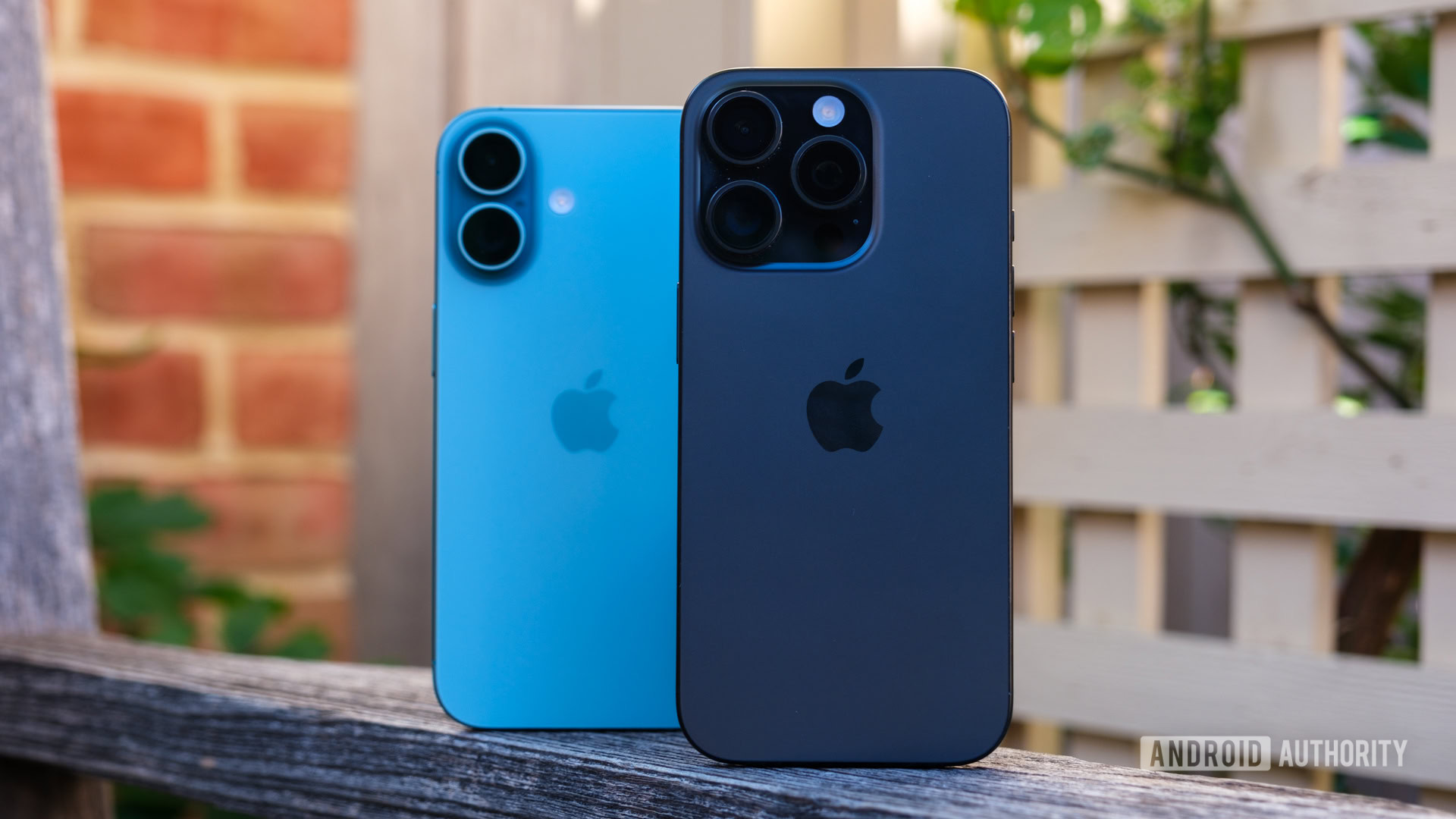
This time, though, I think Apple has improved its color treatment, as I haven’t noticed the same level of smudging on my Black Titanium finish that many reviewers saw on the iPhone 15 Pro and Pro Max. It’s certainly about as sharp as the color black can be, pairing a frosted back with a satin frame, both of which are easy to wipe clean.
But where the iPhone 16 Pro looks good for its understated color, the iPhone 16 shines for just how vibrant it is. Apple swapped its palette of previously pastel finishes for a handful of much punchier tones, including the Teal finish that currently calls my desk home. It’s just colorful enough that I’m tempted to show it off without a case. Outside of the new coat of paint, the iPhone 16 has more differences in its design than the iPhone 16 Pro, too. Its previously diagonal cameras now sit one above the other, while it’s swapped the classic mute switch for a more programmable Action Button.
I’ve kept mine programmed as a mute button, but I’m sure someone out there is being more adventurous with theirs. I might get more use out of it if I could program a double-press differently from a single-press, but that’s not the case. The other new button that graces the side of the iPhone 16 series — all four models this time — is called the Camera Control. If you ask Apple, it’s much more than a button, but to me, it’s kind of just a button. It has a silly level of overlap with the Action Button because you can use either one (or both) to open your camera. That’s not to say I wasn’t excited about the Camera Control at first because I thought physical camera controls sounded great.
I tried my hardest to use it for a while, but I’ve noticed my reliance on it trailing off as days with the iPhone 16 Pro turn into weeks. Yes, it’s an easy way to open your camera settings, but once they’re open, it’s much faster to scroll and select from the display itself, defeating the point of a swipeable button. It’s also proving difficult to overcome the muscle memory of pressing an on-screen shutter button or simply using the volume button like I always have.
Even though I haven’t fallen in love with Apple’s new buttons in the way that I might have expected, it’s not to say that the changes to the iPhone 16 series have been all bad. I quite like that all four iPhones now come in different sizes. Yes, it means you’ll have to be more careful about which case you buy for your new phone, but it also means that the case will offer a tighter fit and better coverage — at least if you pick up the dual-camera iPhone 16 or iPhone 16 Plus.