

Dhruv Bhutani / Android Authority
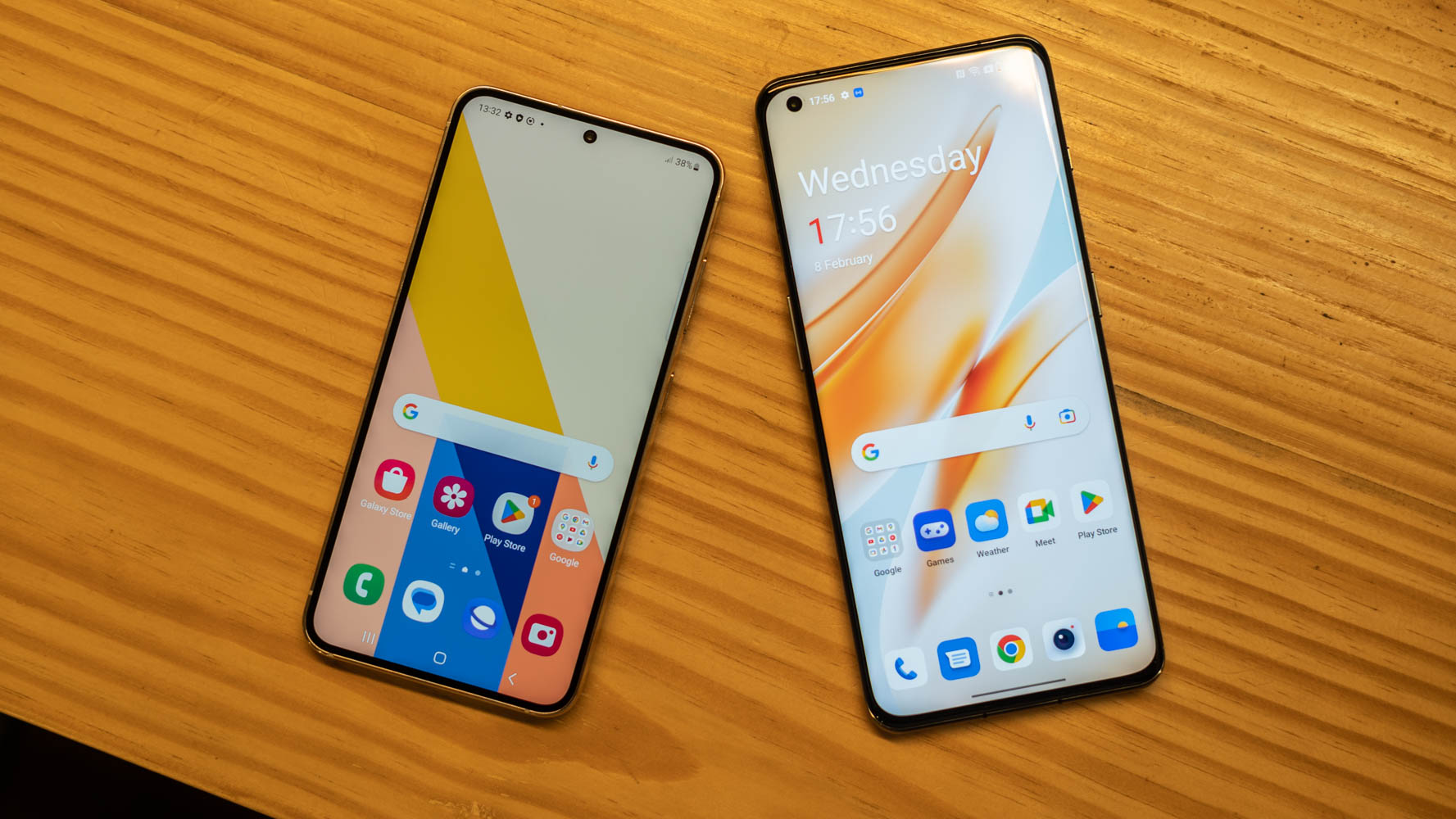
There are many enthusiasts who swear by stock Android. While it is true that many Android skins tend to be bloated and poorly designed, there are some skins that work so well that they surpass stock Android to become something even better. Today, we will be comparing two of these skins in a face-off: Oxygen OS vs One UI.
Oxygen OS is the custom Android skin used exclusively by Chinese smartphone manufacturer OnePlus. Initially focused on simplicity and a close-to-stock experience, Oxygen OS has evolved over the years to become more feature-heavy. One UI, on the other hand, is the custom Android skin used exclusively by South Korean tech giant Samsung. Known for its plethora of options and features, One UI allows users to customize their experience extensively.
When comparing Oxygen OS vs One UI, you may already have a preference. However, some users may be curious to explore the opposing skin due to their familiarity with only one brand. This article aims to provide insight into the differences between Oxygen OS and One UI.
Oxygen OS vs One UI notes:
To analyze the two Android skins, we utilized a OnePlus 12 running Android 14 (Oxygen OS v14.0.0.604 EX01) and a Samsung Galaxy S23 Ultra running Android 14 (One UI v6.1). Whenever possible, we compared the out-of-the-box configurations of the software.
Oxygen OS vs One UI: The basic takeaway
Originally, Oxygen OS closely resembled stock Android but with a touch of elegance and added features to enhance the user experience. However, with its core code now being OPPO’s Color OS, Oxygen OS has become more feature-heavy and distinct from stock Android.
The comparison between Oxygen OS and One UI has shifted significantly over time. While in the past, Oxygen OS prioritized simplicity and elegance at the expense of features, the current versions of both skins offer a similar level of functionality and customization.
Let’s explore the major aspects of an Android skin and compare Oxygen OS vs One UI in each category.
Always-on and ambient display
| Believe it or not, OnePlus officially debuted an always-on display in 2020 with the OnePlus 8T. However, Samsung has had AODs on its flagships for years, making OnePlus the late-comer to this particular party. |
| Once you have it enabled, features are very similar between Oxygen OS vs One UI. |
Lock screen
| By default, Samsung and OnePlus offer similar features on the lock screen. |
| Samsung offers plenty of customization features for the lock screen, including the ability to change app shortcuts and add widgets. |
Lock screen security
| Both Android skins offer various ways to unlock the phone, including PINs, patterns, passwords, and fingerprint scanners. |
| You can also customize how the lock screen is activated in both Oxygen OS and One UI. |
Home screen
| Once you unlock your smartphone, you reach the home screen, which is remarkably similar between Oxygen OS and One UI. |
| Both skins offer plenty of customization options for the home screen, allowing you to personalize it to your liking. |
Home screen settings
| Both Oxygen OS and One UI provide users with the ability to customize their home screens, with options to change transition animations, icon layouts, and more. |