
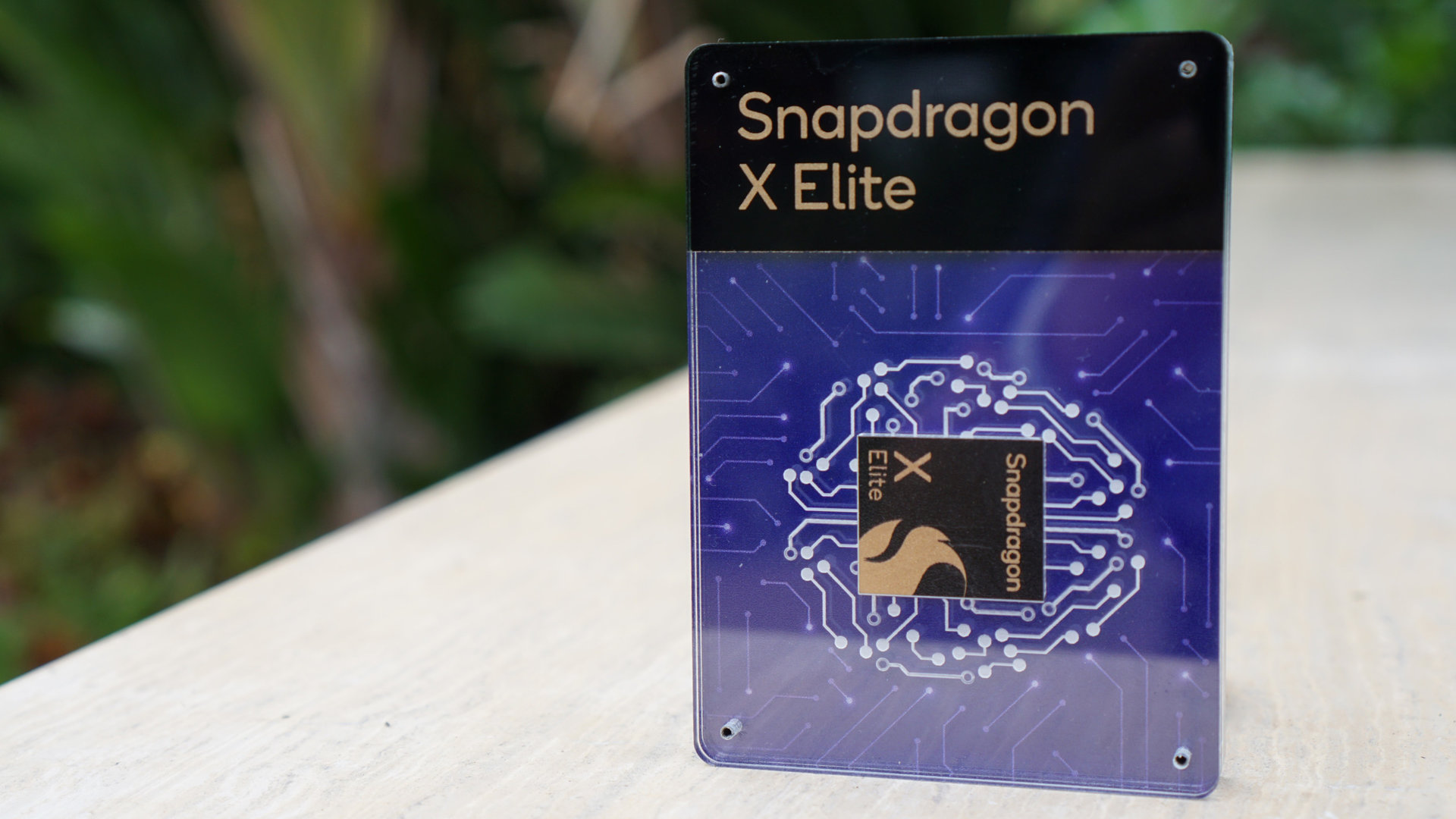

After years of development, Qualcomm introduces its first custom CPU architecture for laptops, the Snapdragon X Elite. In the highly competitive and diverse high-end laptop market, Qualcomm aims to differentiate itself, especially with Apple’s custom M1 and M2 silicon based on Arm architecture. At the Snapdragon Tech Summit, we obtained some benchmarks to compare the X Elite’s performance. However, it is important to note that Qualcomm controlled the session, limiting our ability to run additional apps. Additionally, the benchmark tests used by Qualcomm are not widely used in the industry, making detailed comparisons challenging. Nevertheless, we have gathered the best results available until we can test the first X Elite-powered laptop.
Qualcomm tested two configurations of the Snapdragon X Elite: Configuration A with a hefty 80W TDP, QHD screen, and 64GB RAM, and Configuration B with a more power-efficient 23W implementation, a 2,800×1080 display, and 64GB RAM. To compare, we looked for results from Apple’s M2 and M2 Max, as well as Intel’s 13th generation i7-1370P and high-end i9-13980HX.
Although the observed results did not match Qualcomm’s Geekbench 6 single-core score of 3,227, the X Elite’s Oryon CPU still performs well compared to its rivals within a similar TDP bracket. In multi-core performance, the X Elite’s 12 CPU cores have an advantage over the Apple M2’s eight cores and the Intel i7-1370P’s six high-performance cores and eight efficiency cores. The Apple M2 Max, with its 12 powerful cores, provides a more comparable score to the X Elite, while the Intel i9-13980HX’s higher core count gives it an advantage in heavily threaded workloads. Overall, you would need a higher core count Intel chip to keep up with the X Elite.
In terms of power efficiency, Qualcomm claims that the X Elite can achieve high-performance marks with much lower power consumption than its rivals. This is promising for battery life. As for graphics performance, the X Elite is not designed as a gaming chip, but it performs at a similar level to the Apple M2 in 3DMark’s Wildlife Extreme benchmark.
While it is still early to draw definitive conclusions about the Snapdragon X Elite’s performance potential, there is a promising trend for lower-TDP notebooks. The difference in performance between the 23W and 80W versions of the X Elite is not significant. The 80W implementation may not gain much traction due to being outperformed by the M2 Max and Intel’s highest-end 13th-gen chips in graphics and multi-threading. However, the prospect of achieving Apple M2-level performance or better on a lower power budget than Intel chips is appealing. A Snapdragon X Elite with a TDP of 30-50W could be very compelling.
There are still unknown factors that will determine the success of the X Elite, such as the availability of native Arm software for Windows and potential performance limitations for legacy apps. Additionally, pricing will likely be a significant consideration, as Qualcomm has historically charged a premium for its networking and AI features.