

Google released the stable version of Android 14 in late October. Its own Pixel phones were the first to receive the update, followed by eligible smartphones from other Android OEMs. Pixel owners can install the software on their handsets now using our Android 14 installation guide. Those with phones from other brands will need to wait for OEM-specific Android 14 releases. Let’s take a look at what’s new in Android 14 and run through all the best Android 14 features worth knowing so far.
Android 14: Name and release date
Edgar Cervantes / Android Authority
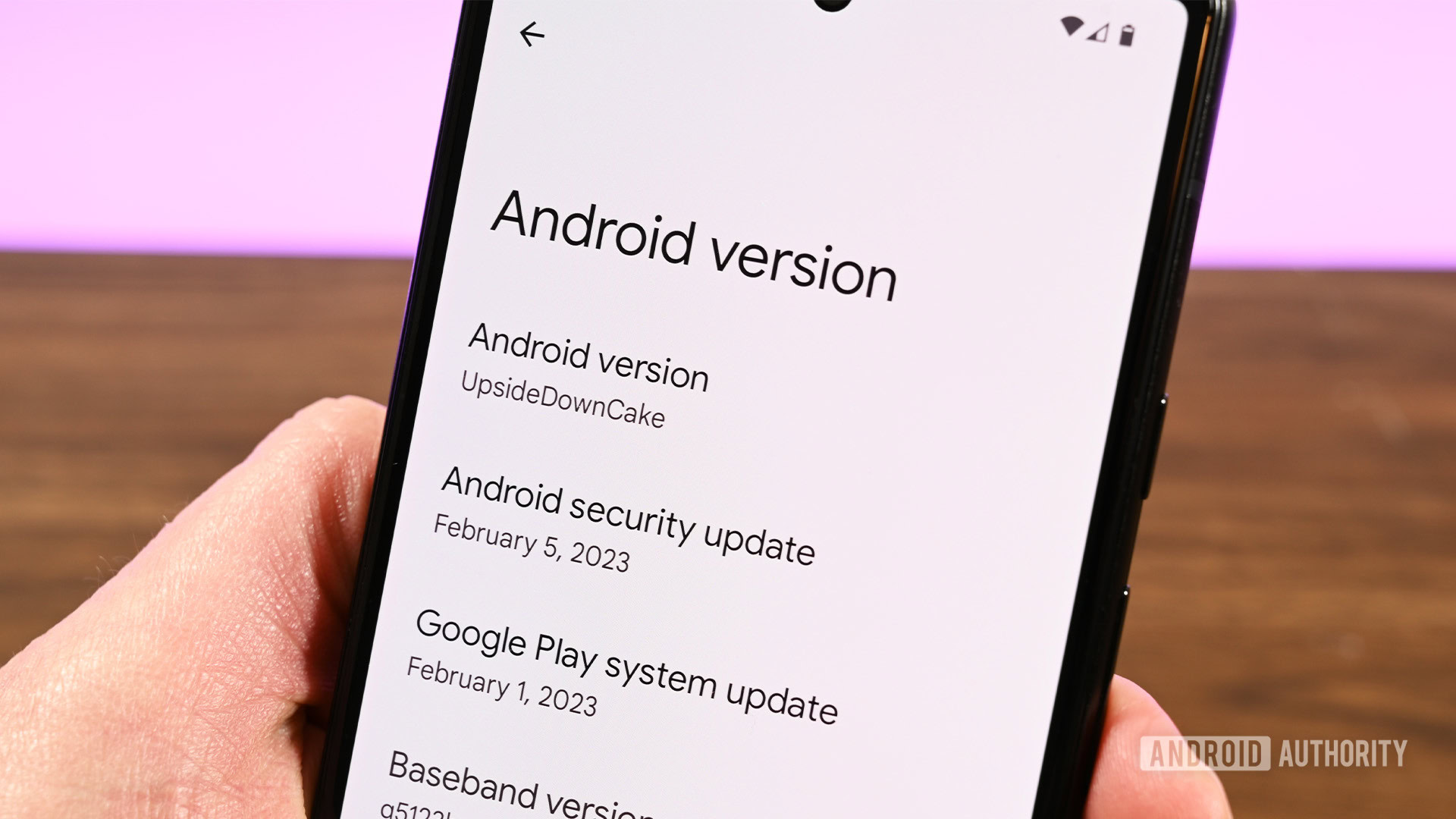
Prior to Android 10, Google used to name its Android versions after sweet treats. This included Android 7 Nougat, Android 8 Oreo, and Android 9 Pie. Nowadays, Google just sticks with the version number, so Android 14 is simply known as Android 14. However, Google still uses dessert names internally, and it turns out that Android 14 is dubbed Upside Down Cake.
Google kicked off the stable Android 14 rollout alongside the Pixel 8 series launch in October 2023. The update also reached the Pixel 4a 5G and newer, including the Pixel Tablet simultaneously.
OEMs often take a little longer to release new Android versions, though, with the likes of Samsung and Xiaomi needing to first customize it with their own software skins. Google previously said that Android 14 will be available on phones from Samsung, iQOO, Nothing, OnePlus, OPPO, Realme, Sharp, Sony, Tecno, vivo, and Xiaomi later in 2023. This was indeed the case, and OEMs continue to bring Android 14 to their devices throughout 2024.
Android 14 Easter egg
C. Scott Brown / Android Authority
With the release of Android 14 beta 4 on July 11, we got our first look at the new Easter egg. As per the official Android 14 logo — which is very reminiscent of the Apollo 14 patch — the Easter egg is all about space travel.
We have a full article going over how you can see the Android 14 Easter egg as well as screenshots of what it’s like. Be sure to give it a look!
Android 14 accessibility features
Google has done a good job over the years when it comes to implementing accessibility features. Android 13 introduced a new reading mode for visually impaired users, native braille display support, and audio descriptions. Meanwhile, Android 12 delivered improved screen magnification and the ability to control your screen with facial gestures. Here are the most notable Android 14 features.
Fonts go even larger
Android has supported large fonts for ages now, but what if the largest option isn’t big enough for you? Well, you’re in luck, as one of the biggest Android 14 features (literally) is larger font sizes. Google specifically notes that users can now scale font sizes up to 200% in Android 14 versus Android 13, which topped out at 130% on Pixels. Interestingly, the company says it’ll also use non-linear font scaling so that text that’s already large won’t see further size increases. For example, a heading might not see a size increase, but smaller text below the heading could grow larger.
Notification flashes
C. Scott Brown / Android Authority
If you are hard of hearing, Android 14 allows you to see notifications by using the camera flash and display to light up. You can toggle these settings in the Accessibility section. Your choice is having the camera flash, the display flash, or both at the same time. With the display flash, you can also choose the color of the flash, which is nice. However, you can’t alter the way the flashes occur (pulse, flash, wave, etc.) and can’t create per-app customizations. The feature is either “on” or “off.”
Language-related improvements
Android 14 also brings tweaks related to language, starting with better support for gendered languages (e.g., French and German) via the Grammatical Inflection API. Another language-related tweak is that developers can now take advantage of more granular per-app language controls. These controls now enable app developers to “customize the language list per region, run A/B experiments, and provide updated locales if your app utilizes server-side localization pushes.”
Regional preferences
If you’re a European living in the US, you might want to use Euro-style measurements, calendars, and other systems. With Android 14, that will be possible. You’ll be able to make temperature units Celsius and make the first day of the week Monday, for example.
Android 14 battery features and tweaks
Robert Triggs / Android Authority
Android 14 brought a variety of changes in an effort to improve battery life. You shouldn’t expect anything massive like Android Marshmallow’s Doze Mode or an extreme battery saver, but these under-the-hood changes should still yield major savings. Google tinkers with Android’s inner workings For starters, Google tweaked two Android APIs (foreground services and job scheduler) with a view to improving efficiency for tasks like background activities and downloading large files. “The user-initiated data transfer job will make managing user-initiated downloads and uploads easier, particularly when they require constraints such as downloading on Wi-Fi only,” Google says of its tweaks related to file downloads/uploads. The battery life focus doesn’t end here, as Android 14 also improved the platform’s internal broadcast system for better efficiency. New permission for alarms Google implemented a “schedule exact alarm” permission, requiring all newly installed apps that aren’t clocks or calendars to request this permission from users. The company explained this addition by saying that precise alarm functionality can affect battery life and other resources. A familiar stat returns One returning feature we’re happy to see is the “screen time since last full charge” feature. The option is back in the battery settings menu after it was hidden in Android 12 in favor of your battery usage over the last 24 hours. This returning option is handy if you want a more accurate idea of how long your phone actually lasts. New battery information Android 14 allowed you to see new battery information such as its manufacturing date and cycle count. The info could be found in Settings > About Phone > Battery Information. Unfortunately, Google pulled this feature in the QPR 2 release and confirmed that this would be coming to the “Pixel 8a and beyond.” Ouch.
Android 14 privacy and security features
Joe Hindy / Android Authority
Android 14 has a ton of features related to privacy and security. We’ve got all the significant changes here, some of which could draw a lot of controversy. Say goodbye to installing super-old apps One of the biggest differences between Android 14 vs Android 13 is that the new update now blocks older Android apps from being installed. Google says this change specifically targets apps built for Android 5.1 Lollipop APIs and older. This is a pretty big change, with the search giant reasoning that malware often targets older API levels that don’t take advantage of more modern security and privacy protections. This tweak means that many abandoned apps (e.g., old games and niche apps) can’t be installed on Android 14 phones. If there’s any consolation, it’s that Google says older apps will remain on your device if you upgrade to Android 14. But this obviously won’t be the case for devices launching with Android 14 out-of-the-box. Only share certain photos and videos On Android 13 and earlier, if an app asks for permission to access your photos and videos, you can either say “yes” or “no.” With Android 14, you have a bit more control. Now, you can allow apps to have access to some photos and videos using the permission notification below:This is great for privacy, as apps can only see the pictures and videos you want them to see (no judgment here, folks). Enhanced PIN privacy and optional removal of ‘OK’ button In Android Settings, you can turn off animations when you enter your PIN. This will make it trickier for “shoulder surfers” to see you enter your PIN and memorize it. This small change could be the difference between someone being able to access your phone or not. As of now, this feature is set to “off” by default. Likewise, Android 14 removes the need to hit an “OK” button after entering your PIN. Instead, you can just enter the number, and your phone will unlock. Note that this will only work if your PIN is six digits or more. If your PIN is six digits or more, it automatically turns the feature on. If you want the “OK” button back, though, you can manually…