
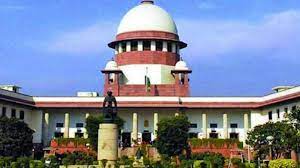

The Supreme Court (SC) has recently delivered strong judgments, reaffirming its role as a vigilant guardian of the Constitution. However, there are still challenges that need to be addressed.
On March 5, 2024, Justice Abhijit Gangopadhyaya, who had been serving on the Calcutta high court since 2018, resigned and announced his decision to join the BJP. This announcement raised concerns about whether he had been impartial in his judgments, especially regarding matters involving the TMC, as he had been in contact with the BJP for some time.
It was noted that in April 2023, Justice Gangopadhyaya had given an interview to a Bengali news channel on a case that was still under his consideration. This led Chief Justice of India, D.Y. Chandrachud, to reprimand him, stating that judges should not be giving interviews on pending matters.
The blurred line between politics and the judiciary is not a new phenomenon. Several judges in the past have been involved in active politics before being appointed to the judiciary. The independence of the judiciary is crucial in a democracy, as governments often seek a judiciary that aligns with their interests rather than upholding the law impartially.
Maintaining the independence of the judiciary is essential to safeguard citizens against authoritarian regimes. Measures such as a cooling-off period of at least two years for retiring judges before accepting government assignments could help preserve the judiciary’s integrity.
While the collegium system for appointing judges has its flaws, it is still better than a judiciary controlled by the executive. Transparency and accountability in the appointment process are crucial to ensure the judiciary remains independent and impartial.
Without an independent judiciary, the words of the poet Ameer Qasalbash will ring true for ordinary citizens, fearing an unjust legal system: “Usi ka shehar, wohi muddai, wohi munsif; Hamein yaqeen tha hamara qasoor nikle ga.”