
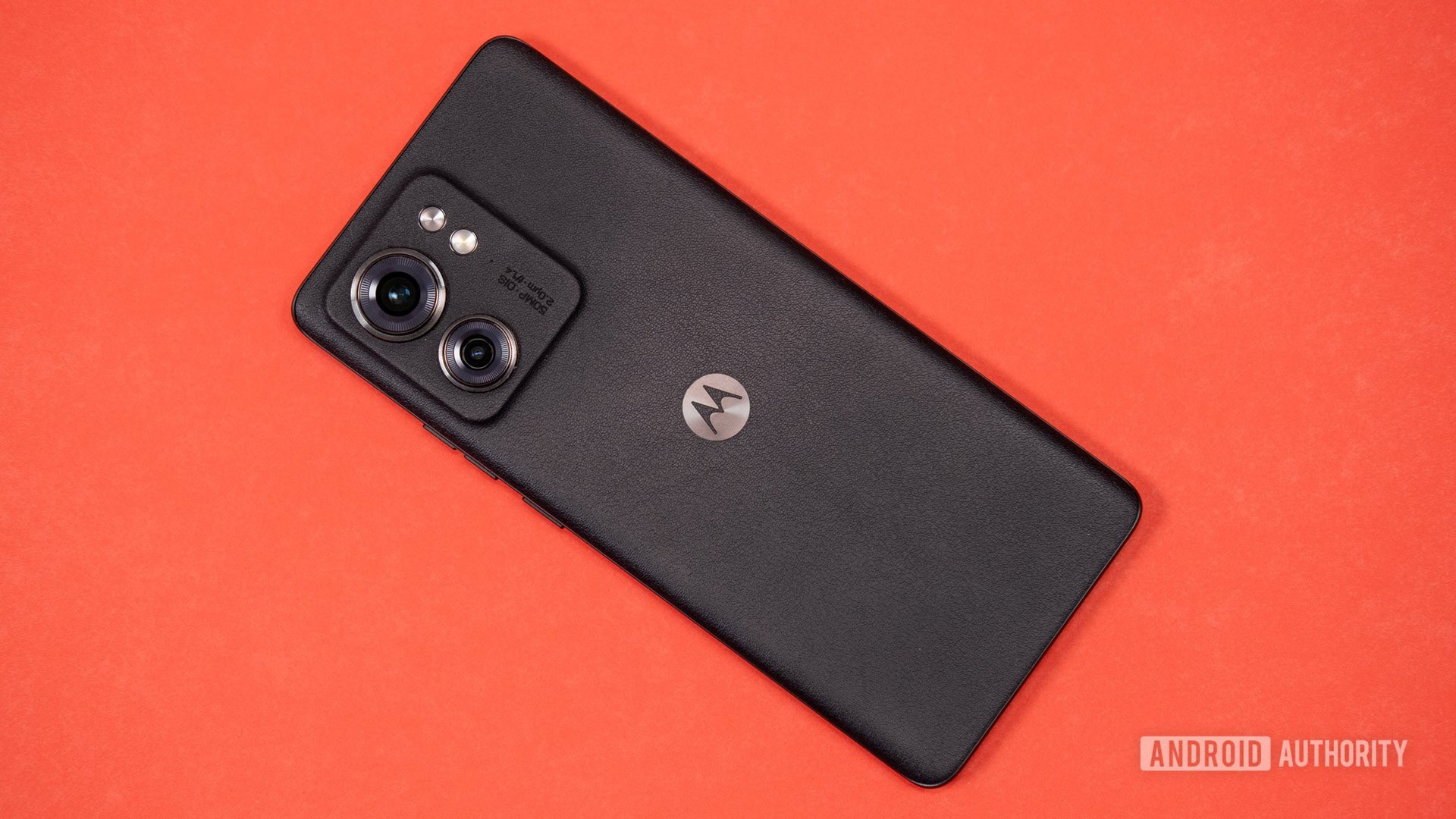

Despite some minor flaws, the 2023 Edge is a solid offering from Motorola, and the price is reasonable at $600. It’s a dependable, lightweight device that won’t break the bank or strain your back.
Motorola Edge (2023) review: At a glance
What is it? The Motorola Edge (2023) is Moto’s latest affordable flagship smartphone, but it’s not as hard-edged as past Edge models. It packs a MediaTek Dimensity 7030 processor, 8GB of RAM, 256GB of storage, and a 6.6-inch 1080p OLED screen with curved edges.
What is the price? The Motorola Edge (2023) retails for $599.99 in the US.
Where can you buy it? The Motorola Edge (2023) is available from Motorola, Amazon, and Best Buy.
How did we test it? I tested the Motorola Edge (2023) for two weeks. The review unit was supplied by Motorola.
Is it worth it? The new Motorola Edge is a good buy if you want a slim, snappy phone with long battery life at an affordable price, so long as you don’t care so much about photos or a robust software policy.
Should you buy the Motorola Edge (2023)? Ryan Whitwam / Android Authority It’s been a long, winding road for Motorola in the smartphone era. It has produced some underappreciated hits (hello, Moto X), big misses (goodbye, Moto Z), and an absolute mountain of budget phones in the ongoing Moto G series. Motorola’s flagship-tier Edge phones have been around since 2020, but the 2023 Edge Plus was the first one that actually felt ready for the big time. Moto might have worked out the formula because the non-plus 2023 Edge is a solid device, as well.
From the moment you pick up the Edge, it feels like a different breed of Android phone. Despite having a 6.6-inch display, the phone feels remarkably compact and comfortable. It’s 7.6mm thick, which is noticeably less than most modern smartphones. More importantly, it weighs just 168g, which is nothing for such a large phone; most are just over 200g. Equally impressive is that the Edge weighs in at the same mark as the Galaxy S23, which is a petite phone with a 6.1-inch display and a meager 3,900mAh battery.
The Edge is the same weight as the Galaxy S23, but packs in a lot more. The Edge saves on weight by swapping the glass panel for plastic, but it doesn’t sacrifice the premium feel. Like the 2023 Motorola Razr, the Edge has a “vegan leather” back panel. The texture is consistent and doesn’t try too hard to emulate real leather, and I appreciate the extra grip, particularly on an Edge phone. It’s also IP68 rated, which a lot of Motorola’s phones — including this phone’s predecessor, the Edge (2022) — are not. The screen is coated with NEG glass, which is a hardened glass similar to Gorilla Glass. It may not be as strong as the name-brand Corning material, but our review unit has held up well despite riding around in a pocket with some keys.
The Motorola Edge (2023) has the same, near-universal smartphone stereo speaker arrangement I feel like I’ve seen a hundred times over, with one on the bottom and the other in the earpiece. There’s no bass to speak of, but the audio remains clear up to nearly full volume.
Motorola has a history of making Edge phones that were not designed to be held by human beings. They had weirdly sharp edges on the frame and an aggressively curved display, making the phones precarious to carry around. The aluminum frame on the 2023 Edge has a matte finish with chamfered edges that make it less awkward. Combined with the low weight and gentler curve, I found it a delight to handle. The buttons are the only part of the build that doesn’t feel solid. They’re slightly mushy, and the power button wiggled visibly when I didn’t press right in the middle.
The 6.6-inch OLED is overall very good, featuring a 1080p resolution and 144Hz refresh rate. The peak 1,200 nits of brightness is plenty for outdoor visibility, but the screen doesn’t get very dim for use in a darker environment. It’s an Edge phone, so you can get curved edges on the display. This design is increasingly falling out of favor (see: Google dropping it for the Pixel 8 Pro), but the curve isn’t too substantial. Still, we have noticed some accidental touches on the curved areas, which is an annoyance that could have easily been avoided by just using a flat screen like most other phones in 2023. I noticed some accidental touches on the curved screen, which is an annoyance that could have easily been avoided by just using a flat screen like most other phones.
With a fairly middling 4,400 mAh battery, I wasn’t all that optimistic about the Edge’s battery life. However, it smashed all expectations. The Edge (2023) easily lasted two days of moderate use in my testing, including web browsing, messaging, video and music streaming, and light gaming. When it’s time to recharge, the Edge supports up to 68W charging, though you’ll need Moto’s latest Turbo Power plug, a $60 add-on that does not ship with the phone. It fast-charges with normal USB Power Delivery plugs, too, but it won’t hit 68W unless it also has PPS (programmable power supply). Does the Motorola Edge 2023 have wireless charging? Yes, the Edge can charge wirelessly up to 15W.
Part of the credit for the Edge’s long battery life goes to the processor, which is more modest than the Snapdragon 8 Gen 2 found in the Edge Plus (2023). This phone sports the rarely-seen MediaTek Dimensity 7030, an eight-core chip with two high-speed CPUs and six efficiency CPUs.
There were times in my testing when the phone could have been faster; for example, a widget would occasionally not load right away, or an app could hang for a moment when returning to the foreground. These disruptions happened often enough that I noticed, but it wasn’t a constant struggle — it’s not a slow phone by any means, but it’d be fair to expect slightly more raw power from a phone at this price range.
The benchmark scores reflect this, as the Motorola Edge (2023) fails to impress when stacked against other affordable flagship phones. Perhaps most damningly, the Edge (2023) barely scores higher than the Motorola Edge (2022)’s ~2,500 peak in 3DMark’s Wild Life GPU test. Again, it’s far from terrible, but don’t expect this to be a gaming powerhouse. At the very least, though, the impressive PCMark score suggests it’ll be a decent everyday performer for mixed use.
The software installed out of the box is overall very good. It’s got Motorola’s usual customizations like Moto Display for notification management, and gestures to activate the camera or flashlight. The chop-chop flashlight gesture is particularly wonderful. At the same time, new additions to Moto’s software haven’t been as good; for example, the barely-there implementation of Material You.
Unfortunately, there’s a bloatware problem on the Edge. It ships with numerous third-party apps like Booking.com, LinkedIn, and an entire suite of Swish apps. We saw these on several Moto G phones this year, but this time, the Swish branding is gone. Most of these apps organize your apps of a certain type, like games or shopping, recommending new ones for which the developer gets paid. The Swish privacy policy says the company can sell your data (including real-time locations) to its partners. And they’ll definitely have your location to sell — Swish also makes the stock weather app on the Edge. We recommend removing all these apps.
The Edge sports a 50MP primary camera and a 13MP ultrawide. Motorola has never been known for imaging prowess, and the Edge (2023) won’t be challenging the best camera phones. However…