
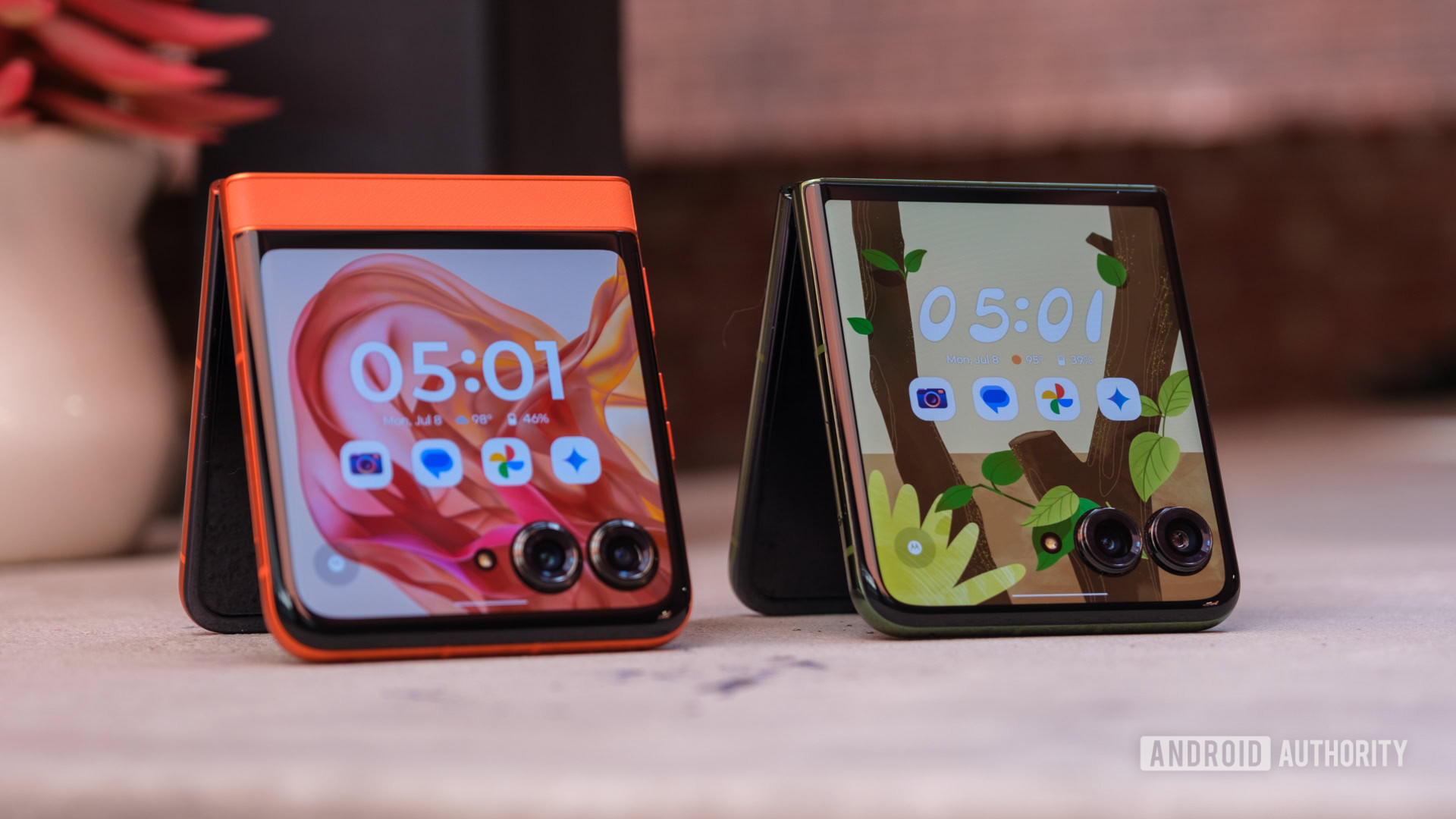

Comparing the Motorola Razr Models in 2024
It’s difficult to determine which Razr model is superior in 2024, showcasing the excellence of both devices. The Razr Plus (2024) boasts a large, smooth cover display and a powerful chipset, while the base Razr (2024) excels in battery life. Furthermore, they feature different camera setups that could influence your decision. Another crucial factor is the price, as one of these models is $300 more affordable than the other. Regardless of your choice, both devices offer elite foldable flip phone experiences.
My Love for the Motorola Razr Plus (2023)
Motorola created my favorite flip-style foldable phone with the Razr Plus in 2023. The device made the cover screen a key feature rather than just an extra, allowing me to rely on a 3.6-inch display for all my daily needs. While the $1,000 price tag came with some flaws, the overall experience was compelling, making me eagerly anticipate the next iteration of the Razr series.
Motorola Razr Plus vs. Motorola Razr (2024)
With the release of the Motorola Razr Plus (2024) and the more affordable Motorola Razr (2024), I find myself leaning towards the base Razr model. The larger cover screen was a highlight of the Razr Plus in 2023, but the base Razr in 2024 boasts even more real estate, offering a significant improvement. Additionally, the Razr (2024) features a lower refresh rate than the Razr Plus (2024), leading to improved battery life and better visibility in daylight.
The differences in camera hardware between the two models are notable, with the Razr Plus opting for a 50MP telephoto sensor over an ultrawide camera. While this decision caters to portrait photography enthusiasts, the absence of an ultrawide camera on the Razr Plus impacts certain scenarios that benefit from wide-angle shots. The Razr (2024) offers a more versatile camera setup with an ultrawide lens, better suited for various photography situations.
Ultimately, the choice between the Motorola Razr Plus and the Motorola Razr in 2024 boils down to personal preferences and priorities. Both devices offer compelling features and experiences, catering to different user needs and preferences.