
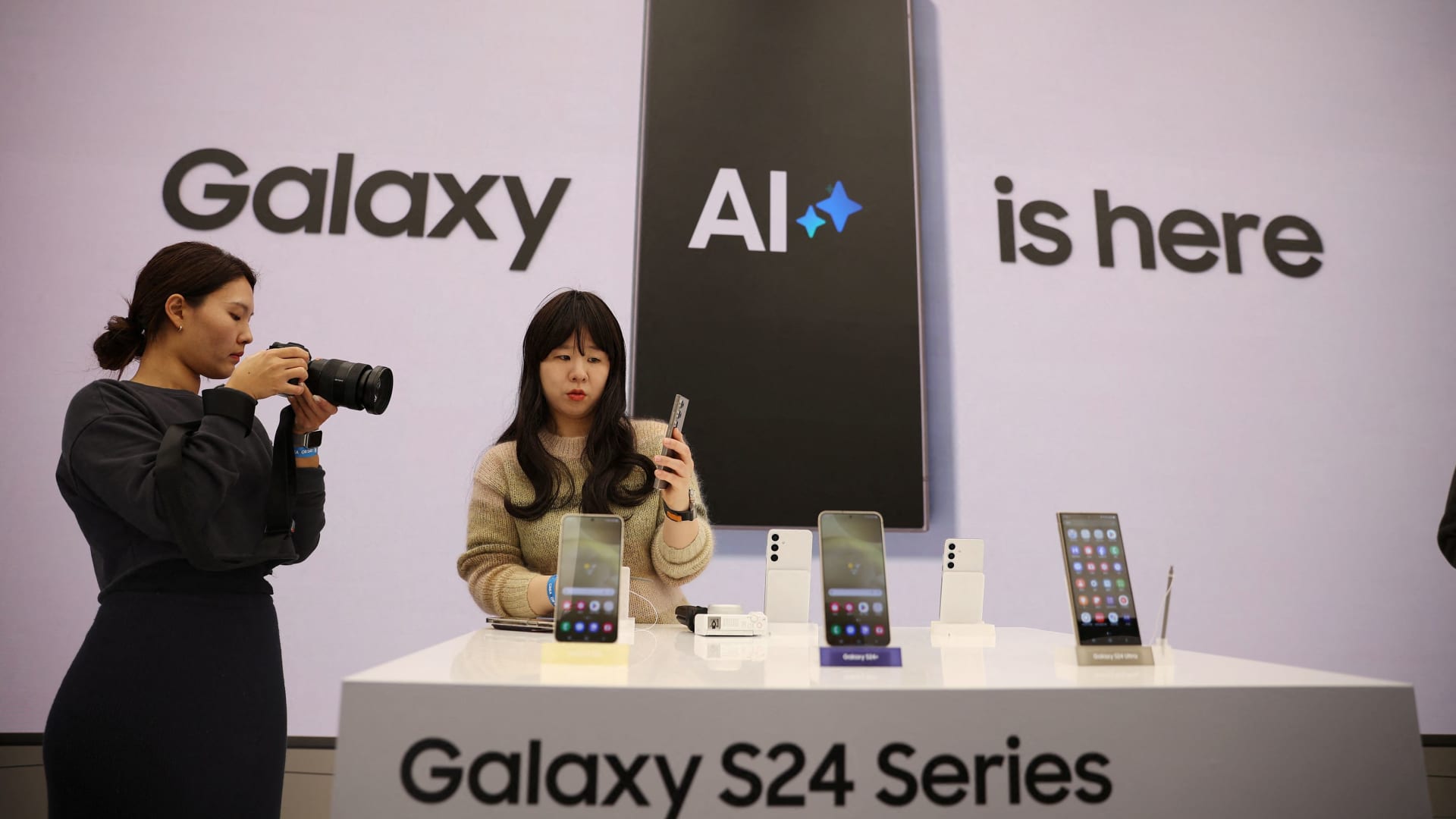

Samsung Electronics showcased their flagship smartphones, the Galaxy S24 series, at an unveiling ceremony in Seoul, South Korea on January 15, 2024.
At the Mobile World Congress in Barcelona, smartphone manufacturers are emphasizing the integration of artificial intelligence into their latest devices, predicting a potential “supercycle” for the industry. Companies like Samsung, Google, and Honor are enhancing their phones with AI features for tasks like translation, summarization, and photo editing using generative AI algorithms stored within the phone chips.
This push for AI comes as smartphone sales have declined, reaching a low of 1.16 billion units in 2023 after the previous supercycle between 2010 and 2015 when smartphone use became mainstream. The unveiling of the iPhone was a significant disruption in the industry, with subsequent advancements seen as less groundbreaking.
Samsung and Google are leading the charge with AI integration in smartphones, aimed at rejuvenating interest in the industry with features like Google’s Tensor processors and AI-driven capabilities like live translation and object search in Samsung’s Galaxy S24 series. However, analysts express doubts about an immediate supercycle, citing elevated phone prices, lack of innovation, and consumer reluctance to upgrade.
While the potential for AI to spark a new supercycle is acknowledged, factors like pricing and incremental improvements in new models may hinder a sales boom. Companies are working on AI technology that could enhance user experience, but widespread adoption is necessary before a true supercycle can occur.