

The best AI chatbots
Like any other piece of software or tool, each AI chatbot has its own pros and cons. So without favoring one or the other, here are the chatbots I keep in my personal rotation and when I turn to each one (in no particular order).
Perplexity
Perplexity bills itself as an “answer engine” and a direct competitor to Google Search rather than a ChatGPT clone. As a result, it is overwhelmingly geared towards research instead of creative writing. Type in a question like “Can a VR headset help me lose weight?” and Perplexity will read through a dozen sources before answering. This is an improvement over ChatGPT, which can but does not always reference search results for its responses.
However, in my opinion, Perplexity’s killer feature is its relatively new Pro Search feature that includes multi-step reasoning. With the feature enabled, you can ask the chatbot complex questions and it will automatically break it down into multiple separate queries or tasks. You only get five Pro Searches every few hours for free, though, beyond which you will need to pay for a monthly subscription.
Perplexity has admittedly found itself in hot water on more than one occasion in recent memory. The company allegedly scraped web content against publishers’ wishes and regurgitated information from dubious sources as part of its responses. The latter can lead to inaccurate responses, but with Perplexity Pro consulting dozens of search results, I’m less worried about it.
Gemini
For a while, Google was ridiculed for arriving late to the chatbot market and playing second fiddle to ChatGPT. The company’s first foray, dubbed Bard, struggled with hallucinations and false responses. Luckily, that has started to change with Gemini now gaining credibility and offering some unique features that set it apart from the competition.
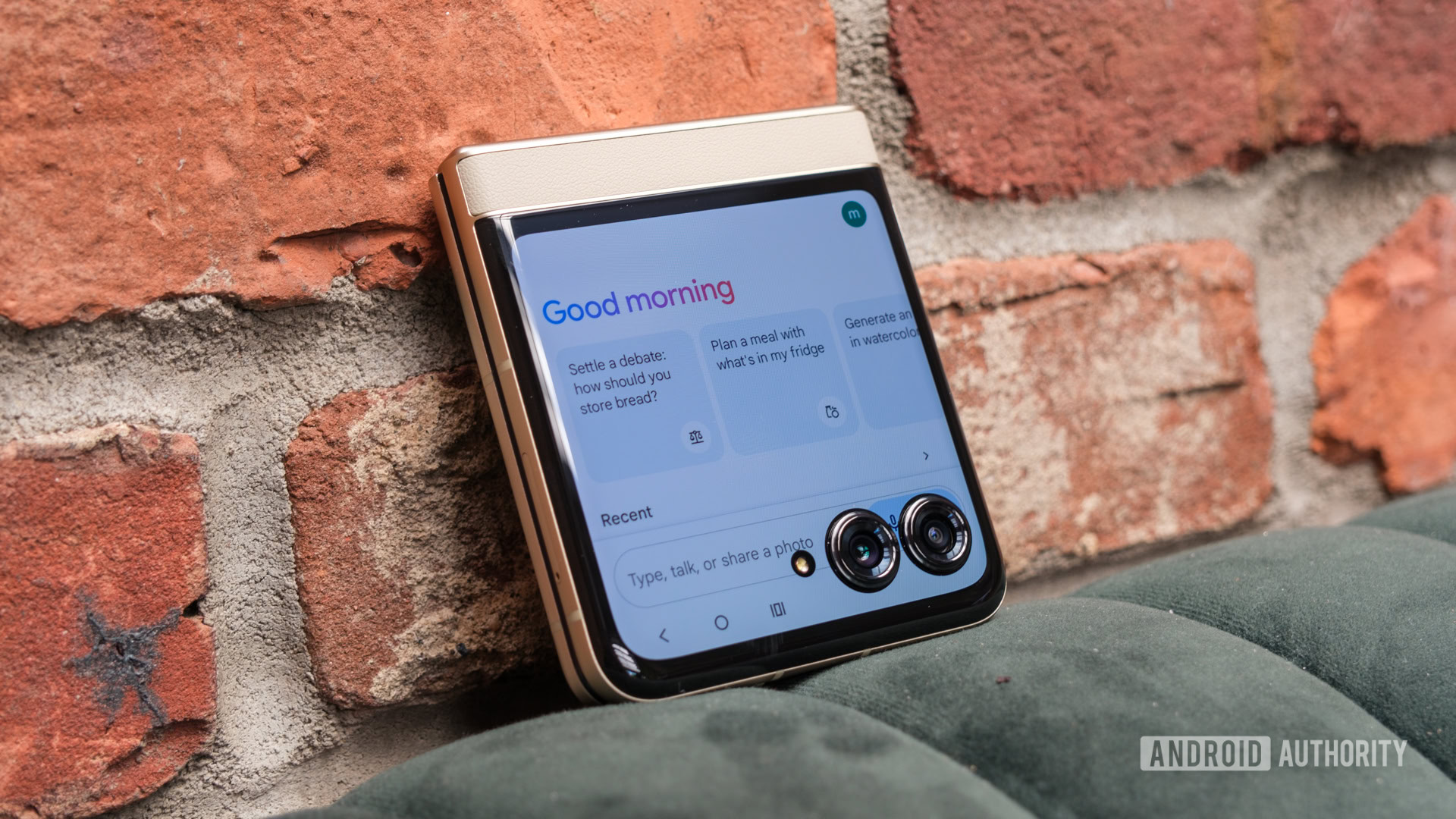
A big reason I rate Google’s chatbot highly is because of how well it integrates into my smartphone usage. Gemini replaces the Google Assistant on Android and it’s currently the only modern chatbot on this list that can perform real-world tasks.
Gemini Live is the other big reason I’d use Google’s chatbot — it’s a new feature that allows you to have back-and-forth voice conversations. You can interrupt the chatbot while it speaks and change topics whenever you want, just like talking to a real human.
ChatGPT
Everyone knows about ChatGPT at this point but many do not know that it has improved leaps and bounds in recent months. Until quite recently, it relied on the aging GPT-3.5 language model and could not search the internet for new information. Thankfully, competition has forced OpenAI to offer its GPT-4o model for free, albeit with turn limits that reset every few hours. ChatGPT can also search the internet now, no subscription necessary.
Voice chat is another big reason to use ChatGPT and the basic version is completely free to use via the mobile app.
Grok
It is easy to forget that Grok exists, especially since you need an X Premium subscription to use it. However, Grok is surprisingly competitive in the chatbot race. On the aforementioned LM Arena leaderboard, the latest Grok 2 model ranks just below GPT-4o and trades blows with Gemini 1.5 Pro.
Grok’s big selling point is that it references tweets for real-time information instead of searching the broader internet. This can be useful in certain situations since breaking news still hits X (formerly Twitter) before many mainstream news outlets.
Claude
Unlike the other chatbots we’ve looked at so far, Claude is unique in that it does not consult the internet for real-time information. Instead, it positions itself as a “helpful and harmless” AI that answers questions as directly as possible.
Claude’s underlying language model was trained on a smaller dataset than most of the competition, ensuring safer and higher-quality responses.
What makes Claude stand out is Artifacts — a feature that allows the AI to create entire websites, slideshows, diagrams, and code snippets in a separate window. People have created simple games and web apps using this feature, making Claude extremely useful if you are a developer or creative professional.
That’s all for our list of the best AI chatbots. It’s worth noting that Meta AI and Microsoft Copilot didn’t make the cut because they do not offer any unique features over the competition, but they’re solid choices too. Which AI chatbot do you prefer?