

Gaming handhelds have been around for decades now, but with the Steam Deck breaking the market open a few years ago,
it feels like we’re having a resurgence of emulation-focused handhelds. And while expensive handheld gaming PCs like the Asus ROG Ally and Lenovo Legion Go often get the lion’s share of the attention, Android-based gaming handhelds are absolutely perfect for retro gaming. Here are a few key advantages:
– Access to Android apps and games (including retro game ports and Android emulators)
– Improved portability over more powerful handhelds
– Better battery life and connectivity options
– More touch-friendly than Windows-based handhelds
– Much cheaper than gaming phones
With all that in mind, we’ve selected the best Android retro gaming handhelds to help you hop back in time and get your nostalgia gaming fix.
AYN Odin Pro:
AYN is a relative newcomer to the gaming handheld scene, but its Odin Pro device is our pick for the best Android retro gaming handheld for most people. It’s got the right mix of ergonomics, raw power, and accessible pricing to make it an easy recommendation. Measuring roughly the same size and shape as the Nintendo Switch Lite, the AYN Odin Pro is the perfect size for portable gaming. It features curved handles on the back, making it more comfortable to hold than the Switch Lite for long gaming sessions, plus a bright 6-inch 1080P LCD screen to really make classic games pop. The D-Pad and face buttons offer great tactile feedback, and the triggers have a more modern design with no click. There are customizable backplate buttons on the handles, as well. It runs Android 10, which is slightly dated, but more than recent enough to run the latest emulators. Being an Android-based retro gaming handheld, there is a lot of room to tweak features, but it comes with the added ability to swap between performance profiles to eke more game time out of the 6,600mAh battery.
Retroid Retro Pocket 3+:
If you want something more affordable, the Retro Pocket 3+ is a fantastic alternative. It’s cheaper than even a basic cheap Android phone, but it’s capable of emulating games up to the PS2 and Gamecube era, with a few exceptions. This is mostly due to the Unisoc Tiger T618 processor, which won’t be found on too many Android phones, but it’s more than powerful enough for most retro games. It will struggle with some more demanding PS2 games like Grand Theft Auto, but anything below that should run like a dream. The design of the Retro Pocket 3+ is fairly standard, with a Switch-like layout and a small 4.7-inch touchscreen. At $150, it’s hard to beat the value on offer here.
Logitech G Cloud:
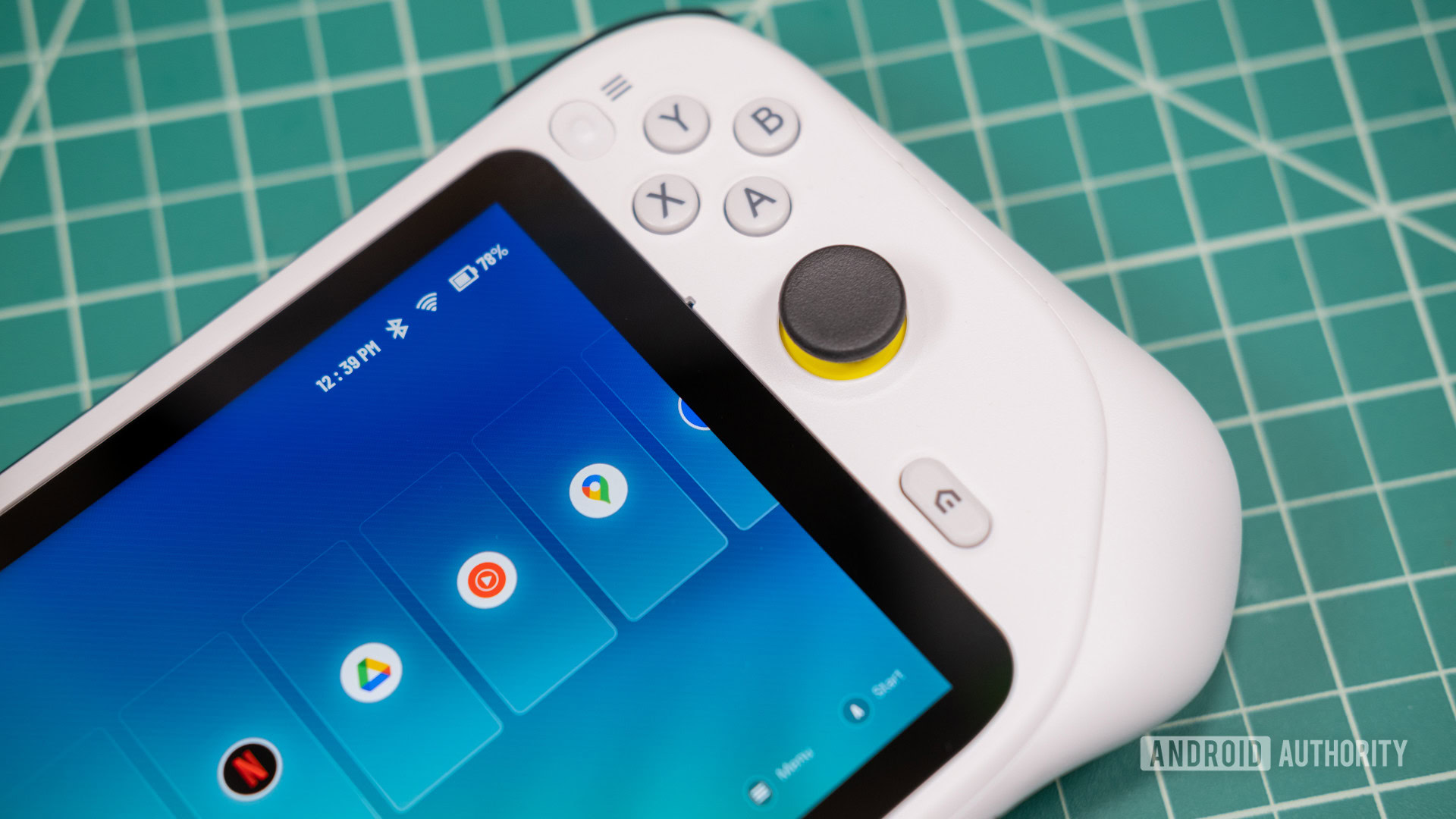
The Logitech G Cloud wasn’t designed to be a retro Android gaming machine, but it’s probably what it’s best at. The cloud-first device was made for streaming services like GeForce Now, Xbox Cloud Gaming, or the now-defunct Google Stadia, but in our review we found the lack of WiFi 6 and poor cloud performance to be dealbreakers on that front. However, it’s still a very well-made device, with a 1080p display that’s plenty sharp and bright for retro gaming. The face and shoulder buttons are also great, and the overall build quality is a step above the more budget-friendly devices listed above. The Logitech G Cloud sports a Snapdragon 720G, which is a mid-range gaming-focused SoC that mostly hits the nail on the head. It ran everything up to and sometimes including the PS2 and Gamecube era, although it really shines with PSP emulators and older. The more efficient processor also enables excellent battery life, from 10 to 12 hours in our review.
Razer Edge:
The Razer Edge is yet another premium device, and it features a unique design that’s more like an Android tablet with an attachable controller than a standalone gaming handheld. In fact, the controller is available separately as the Razer Kishi V2, and you can attach it to pretty much any smartphone for a similar experience. It sports a large 6.8-inch OLED screen, putting it in the same size category as the largest Android phones, even without the controllers attached. On the inside, it’s powered by a Snapdragon G3X Gen 1 SoC. This isn’t the latest mobile processor, but combined with the enhanced cooling features on the Edge, it will outperform most flagship phones when it comes to sustained gaming. However, we did notice that those fans do get a bit loud. Unlike the Logitech G Cloud above, the Razer Edge features a fairly stock Android 12 experience. The pre-loaded Nexus app was more trouble than it was worth in our experience, but with full access to the Google Play Store, you can download as many emulators as you could possibly need.
Anbernic RG353P:
Getting back into affordable territory, the Anbernic RG353P is great for true retro gaming. It won’t play anything from the PS2 era or newer, but it can still play most Dreamcast games reasonably well with its RK3566 Quad-Core SoC. It’s clear from the get-go that the RG353P is a budget device, with a much smaller 3.5-inch IPS display. It still a touch display, though, and the device comes with the ability to boot in either Linux or Android 11. It’s probably more comfortable to use in Linux, and it comes with emulators pre-installed, but it’s nice to have the option.
GPD XP Plus:
Our last pick for the best Android retro gaming handheld is one of the most powerful, but also the most expensive. The GPD XP Plus features a modular design that allows you to swap in and out the right-hand controller to suit whatever you’re playing. Powered by the MediaTek Dimensity 1200, this device can run everything up to and including PS2-era games with ease, and the sizable 7,000Ah battery will keep you gaming for upwards of 10 hours on a single charge. The build quality isn’t quite as good as other handhelds in its price bracket, but it will get the job done. One bright spot is the huge 6.81-inch display, which might be overkill for retro games. Being Android-based you can also play any games from the…