
While driving back home after a concert in the mid-2000s, Vidya Shah was chased by four men in a car near Delhi’s Nizamuddin colony one night. Speeding didn’t help, so Shah — who was in her 30s at the time — took an unexpected turn towards Jangpura.
“I managed to lose them, but it was a harrowing experience. Anything could have happened to me that night,” recalled Shah, a renowned musician.
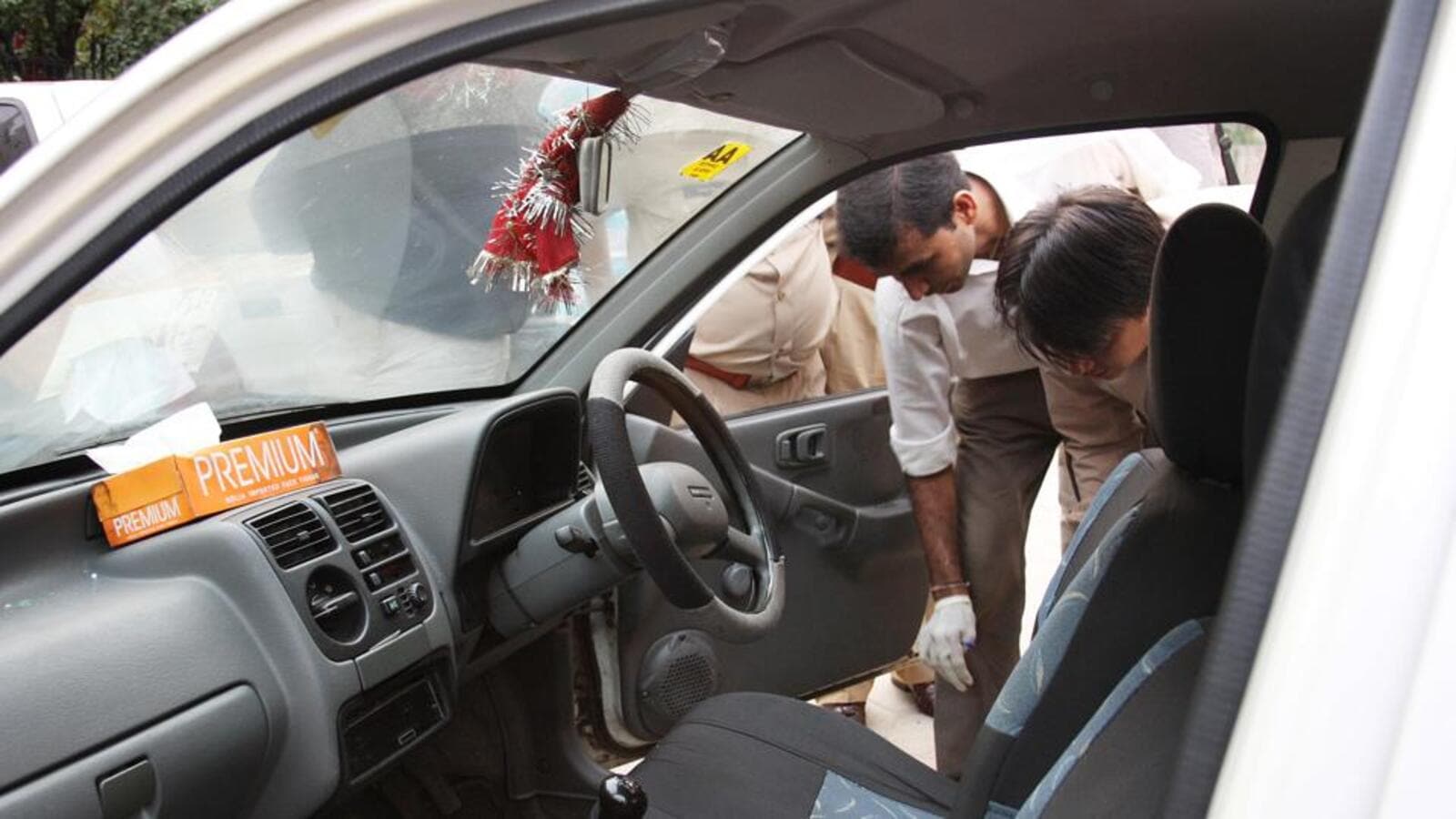
A few years later, in September 2008, when she read about the murder of Soumya Vishwanathan, a 25-year-old journalist, in her car in south Delhi’s Nelson Mandela Marg, she had goosebumps. “No one knew who the culprits were and why they did this for a year after that, but it was scary. I remembered my own experience and wondered what Soumya would have gone through,” said Shah.
READ | Delhi court convicts 5 in Soumya Vishwanathan murder case; mother demands life imprisonment
In 2008, National Crime Records Bureau (NCRB) data showed that there were 3,515 crimes recorded against women in Delhi. In 2009, the number faintly went up to 3,701. Last year, 13,988 cases of crimes against women were registered in the city, according to Delhi police records. In the last 15 years, the number of registered cases has gone up — partially due to people’s awareness and police’s willingness to file FIRs — but is the city any safer?

Delhi, home to over 20 million people, has earned two infamous monikers over time — “crime capital” and “rape capital.” The 2012 Delhi gang rape and murder of a young paramedic made international headlines, and led to thousands of angry citizens protesting, demanding change. Before that, however, in 1996, law student Priyadarshini Mattoo was found raped and murdered at her Delhi home by her stalker. In 1999, model Jessica Lal was shot dead at a party in Mehrauli by Manu Sharma after she refused to serve him a drink. In 2002, a medical student was raped at the Khooni Darwaza near ITO. In 2005, a man, unwilling to accept rejection, threw acid on Laxmi Agarwal’s face near Khan Market.
And in 2008, Vishwanathan was shot dead by four men in her car in a robbery attempt. Over 15 years later, on Wednesday, a Delhi court convicted four men for her murder. “We’ve lost our daughter, but this will act as a deterrent for others…,” said her mother Madhavi, minutes after the verdict was announced.
READ | Soumya Vishwanathan murder: Accused dependent on proceeds of crime for livelihood, Court rules
For scores of women across the city, the Soumya Vishwanathan murder case was personal, an attack on their mobility. After all, the city had shrunk further for them. “One can never forget this case. It led to a conversation on women’s safety, and every working woman found herself worried. I don’t think much has changed since then. Even today, women continue to face struggles while heading home from work,” said Poonam Kaushik, a women’s rights activist.
Safety a concern after dark
When Rani Ahuja moved to Delhi from Mumbai 11 months ago for work, her parents threw a fit. “It’s not safe for women, come back,” they often plead.
To calm her panicked parents, the 30-year-old follows a series of steps each night. First, a quick call home to her mother to inform her that she’s heading home, followed by sharing cab details on WhatsApp with her, and then finally a “reached home” text. “I believe that Mumbai is safer than Delhi, especially at night but I have found ways to live here,” said Ahuja.
Talking about ways to live here, Preeti Sharma, 28,an IT professional, said that while walking on a busy street, she often finds herself grabbing on to the pepper spray in her pocket. “If I’m crossing a dark or dimly-lit street, I prefer to stay on a phone call till I get home. If no one picks up, I just pretend to be on a call.”
That mobile phones have added a layer of security — or at least a sense of it — is only a recent phenomenon. In the late ’80s and ’90s, when mobile phones were unheard of, Radhika Chadha, who was studying history in Delhi at the time, had a self-imposed curfew. “I grew up like that, I never fought it. The city was so unsafe that there was no way we would get out at night without the assurance of being picked and dropped back home. I preferred to take the DU special bus to college, never public buses. And we preferred to travel in pairs. The metro changed things,” said Chadha, a DU professor, who is in her 50s.
Her daughter, 23-year-old Diya, doesn’t think Delhi is safer than it was a few years ago but one tangible change brings her some respite. “There are more streetlights, I feel safer when the road is lit. Apart from that, we take our own precautions even now. No cabs post 9pm, avoid driving alone, and I watch how I dress in public,” said Diya.
Meanwhile, Shah finds herself in the middle of wild arguments with her children and their friends over clothes. Almost embarrassed, she said, “I know what I am saying is not right… My fear has transferred to my motherhood as well. But I do sometimes suggest that my daughter take a scarf or a jacket in the metro with her.”
Her daughter, Antara, a 19-year-old college student, understands her mother’s suggestions. “I have had unpleasant experiences in this city. My friends and I tend to cover up in public, and then we change into what we want to wear when we reach home,” she said.
Measures taken, say police
According to Delhi Police, several steps have been taken over years to ensure safety of women in Delhi. Delhi Police spokesperson Suman Nalwa said, “It has been done in tune with the changing dynamics of the city life — starting with an increase in percentage of women cops in Delhi Police. Now there are all-women PCRs, special helpline numbers, and the police treat crimes against women as their highest priority while responding to calls.”
Nalwa also mentioned the Himmat plus app and the “Shashakti” self-defence for women programme. She said, “We have also identified dark spots in the city, and are working with civic agencies to get that remedied.”
Ranjana Kumari, a social activist and director of Centre for Social Research, added that the Capital had seen some improvements in terms of infrastructure, but more intervention is required. “The Nelson Mandela Marg was an important stretch even then. Dark spots were a major problem. Over the years, the number of dark stretches has reduced with more CCTV surveillance. One can see more crowds on the road. But a lot more needs to be done since we continue to see crimes against women,” said Kumari.
Jasmine Saha, a 27-year-old who works at a non-profit too awaits the day these measures will be adequate. “There aren’t enough police vans on the roads nor are they uniformly distributed throughout the city. When you hear about cases like Soumya Vishwanathan or the 2012 Delhi gang rape and murder case, the immediate response is a bone-chilling thought that what if this happened to me or someone close to me?”
The minute the clock strikes 10pm, Saha battles a familiar nagging thought when outside her house — “I am not safe, I am not safe.”
 Subscribe today by clicking the link and stay updated with the latest news!” Click here!