
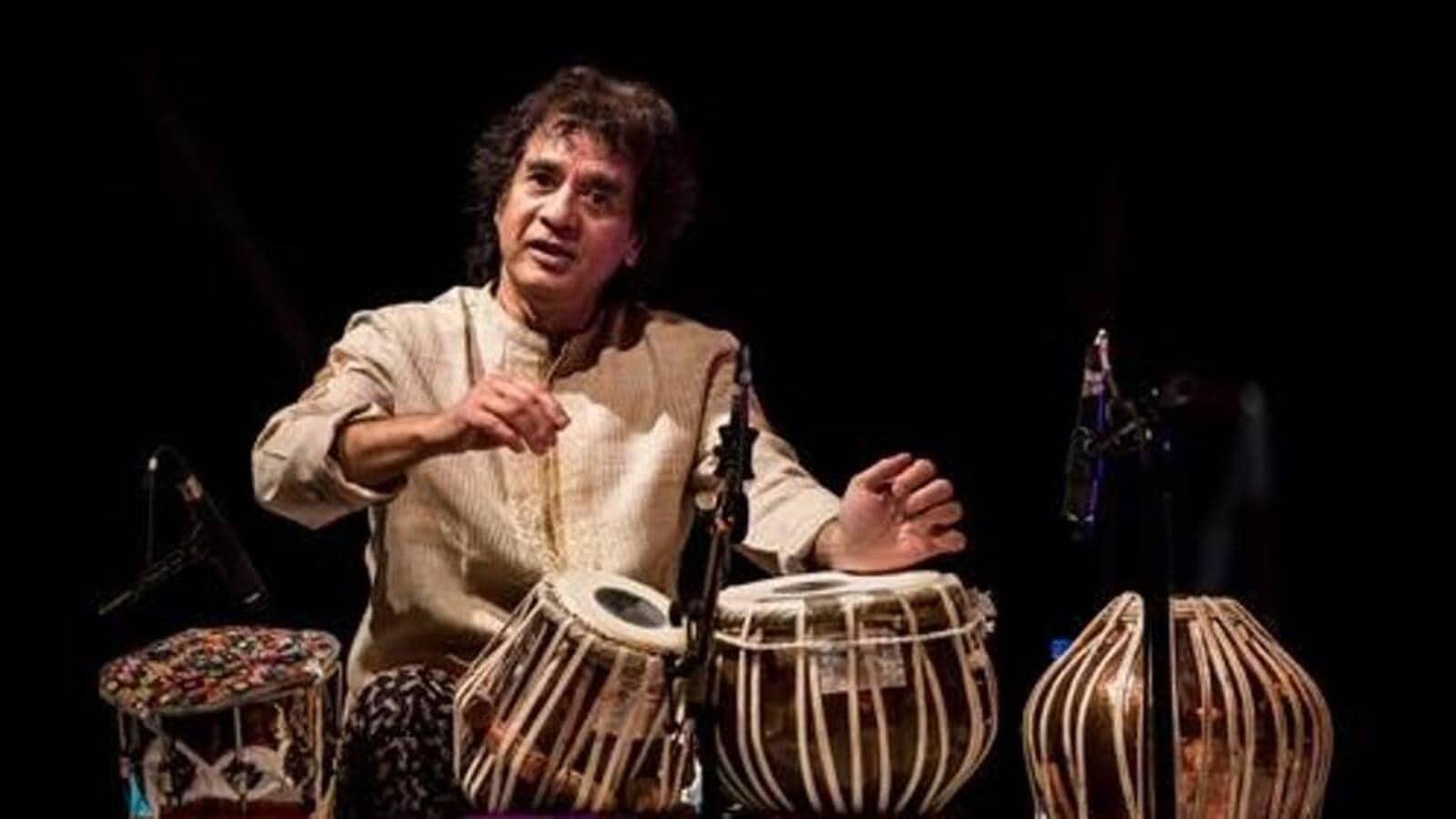

Tabla maestro Zakir Hussain made history at the Grammy Awards on Monday, becoming the first Indian to win three of these trophies in a single night.
The 72-year-old was among the winners in the Best Global Music Performance, Best Contemporary Instrumental Album and Best Global Music Album categories.
Hussain now has five of these awards in all, equalling the tallies of the late sitar maestro Ravi Shankar and the master conductor Zubin Mehta; they are all in top spot, incidentally, on the list of Indians with the most Grammy wins.
“Thanks to the academy, thanks to all these great musicians for giving us such beautiful, tight music together. Thank you all,” Hussain, dressed in an embroidered white kurta, said as he accepted the trophy for Best Global Music Performance, in Los Angeles.
Also Read:Ustad Zakir Hussain: I cannot thank social media enough
That win came for Pashto, written and recorded in collaboration with American banjo player Béla Fleck, American bassist Edgar Meyer and Indian flautist Rakesh Chaurasia. The song pays tribute to the tradition of Indian classical musicians playing with British imperial bands in early-20th-century India.
“One of our members is missing (from the event), Mr Béla Fleck,” Hussain said, in his speech.
“So from him, and from Mr Rakesh Chaurasia, and Mr Edgar Meyer, our deepest thanks. Our families are here and without them, we are nothing. Without love, without music, without harmony, we are nothing”, he added.
Hussain’s second Grammy of the night was for Best Contemporary Instrumental Album, which he won alongside Fleck, Meyer and Chaurasia, for the eclectic classical-meets-jazz album, As We Speak.
He co-won Best Global Music Album, for This Moment, the critically acclaimed comeback of the pioneering world-fusion band Shakti. The band beat stars such as Susana Baca, Bokante, Davido and Nigerian pop sensation Burna Boy, to win the award.
Shakti reunited in 2020, after a decades-long hiatus, with founding members Hussain and John McLaughlin joined by regular collaborator Shankar Mahadevan and young bloods V Selvaganesh and Ganesh Rajagopalan.
In a jubilant speech, Mahadevan thanked “God, family, friends and India”. “India, we are proud of you,” he said. “I would like to dedicate this award to my wife whom every note of my music is dedicated to.”
This last award will have special significance for Hussain, not just because it means long-overdue recognition for Shakti. But because, in 1992, Hussain was among the winners of the first-ever Best Global Music Album award — then called Best World Music Album — for Planet Drum, by Grateful Dead drummer Mickey Hart in collaboration with Hussain and six other artists from around the world. Another win in this category followed, in 2009, this time for Global Drum Project, a collaborative album with Hart, the Nigerian Sikiru Adepoju and the Puerto Rican Giovanni Hidalgo. This latest victory puts Hussain in the rare club of artists who have won the award three times (the Beninese artist Angelique Kidjo holds the top spot, with five wins). Shakti’s win also means that Indian artists have won in the category four times, equalling the tally of the US and Benin, and one trophy behind top-spot-holder Brazil.
Among the Indian nominees that did not win was Abundance in Millets, a song by Falu and Gaurav Shah in collaboration with Prime Minister Narendra Modi. Overall, though, in a time of successive years of Grammy and Oscar wins for Indian music, it was another night of recognition for India overall.