
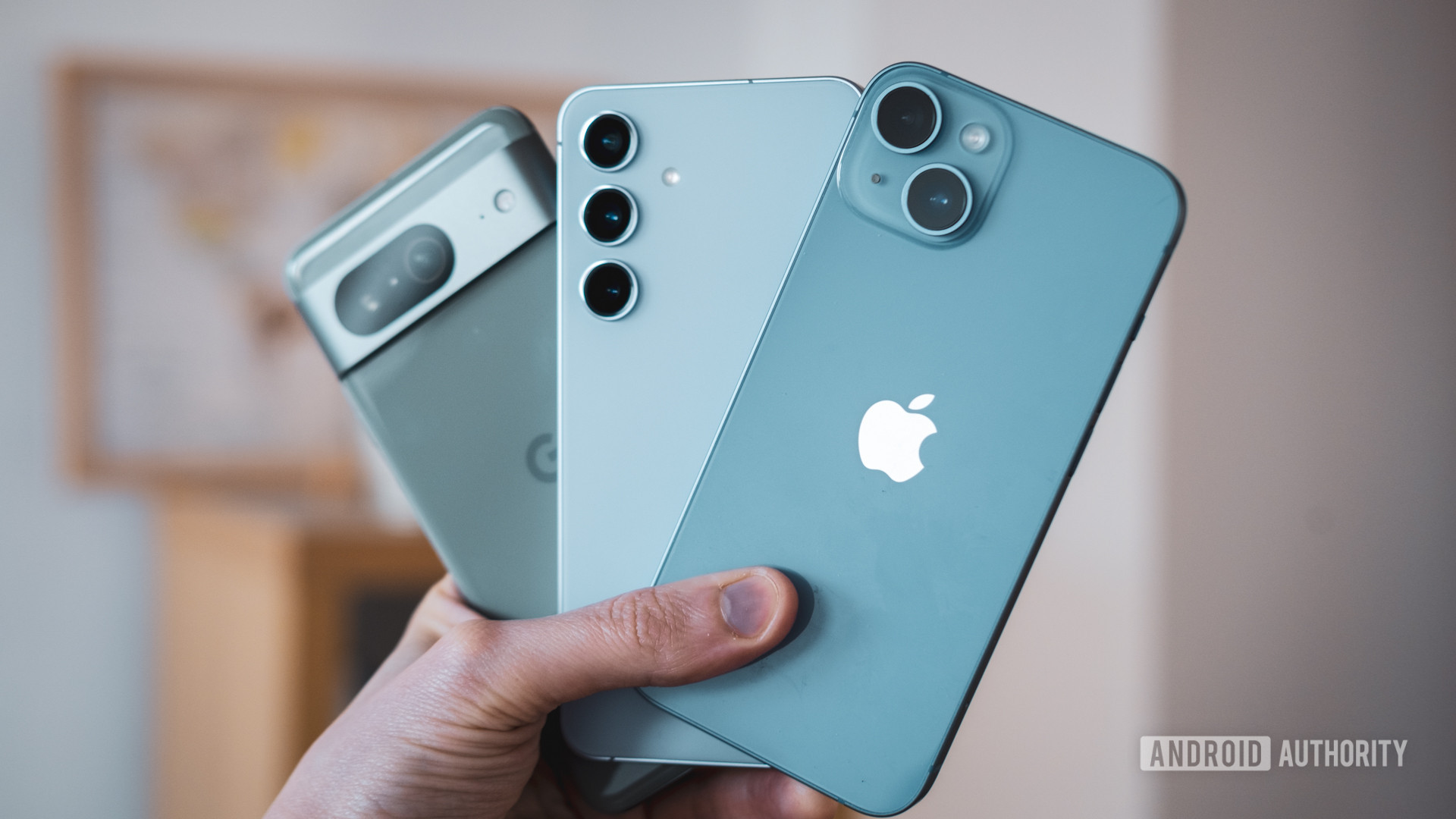

Robert Triggs / Android Authority
The offer of a free phone is a huge enticement. It’s one we see almost every big carrier dangling as a carrot to get your business. However, while there might be prize draws and generous YouTubers who’ll give out a free iPhone 16 to a chosen few, the phrase is often misleading — no carrier is giving you $1,000 worth of hardware for nothing in return.
We’ll break down the overall free phone package you sign up for from the big three US carriers, then compare it to just buying the device unlocked and bringing it to a more affordable provider.
QUICK ANSWER
The numbers below show that getting a free phone from a major US carrier doesn’t offset the more expensive unlimited plans compared to those of MVNOs. Budget-conscious shoppers are better off buying the phone unlocked and then taking it to a smaller provider.
JUMP TO KEY SECTIONS
Are free phones really free?
Ryan Haines / Android Authority
Not exactly, because these offers aren’t no-strings-attached. The only thing you can be sure of with these promotions is that you won’t be required to pay anything for the phone upfront other than taxes and fees. It’s likely that you’ll pay for the phone eventually, but it will be in more subtle ways.
The most tangible form of payment you might be required to give is asking you to trade in your old device. Swapping out your outdated model for the latest flagship would be a no-brainer if it were the only condition, but it’s more likely to just be a part of the contract you’ll be signing with the provider.
Trade-in or not, the monthly payment plan is where carriers really recoup the phone’s value. Not only will you be required to commit to a service plan at a specific rate to unlock the deal, but you’ll also have to stick with it for a minimum term. 24- or 36-month contracts are the new normal these days. The agreement you make is more like being loaned the money to buy the phone by the carrier and repaying each month as part of your total plan price. That’s why there will be a balance to pay for the phone if you end the contract before the minimum term is up. You’re being loaned the money to buy the phone by the carrier.
The carriers could still make a case that the phone is free, as you might be paying the same as another customer and getting the hardware for no extra cost. There are good counter-arguments to this. The customer who hasn’t changed provider in a few years is arguably paying over the odds — the cost of the expensive unlimited plan builds in promotions like free phones, and they haven’t shopped around. That customer also probably isn’t committed to the contract for another two or three years in the way you’re about to be.
Even if you realized all of this a long time ago, you might not have had the time to sit down and work out if a ‘free phone’ promotion is a good offer. After all, just because there are conditions to a contract doesn’t mean it isn’t your best option. We’re happy to do the math and help you understand the true cost of a free phone on a carrier plan.
What’s the true price of a free phone?
Edgar Cervantes / Android Authority
When the carrier says that you will get a free phone and then bill credits each month, it’s essentially admitting that the phone isn’t truly free. Instead, it is being paid for through your monthly bill over time. The carrier could argue that the phone is still free since it doesn’t charge you more for the plan, but it’s important to make this repayment distinction. If you trade in your old phone, you receive a one-time bill credit based on your trade-in value. If you think of the loan analogy from the previous section, the value of your old phone is like the downpayment.
The better question for consumers is to ask how much money you’ll commit to pay for the phone and plan overall. Let’s do a bit of math to work that out.
There are a huge number of combinations of phones and plans to consider, so we’ll keep things simple. We’re going to look at the big three mobile carriers in the US: Verizon, AT&T, and T-Mobile. They don’t all have the same free phone offers, but we’ll choose one flagship phone from each and consider the cheapest way that you can sign up for this deal as a new customer switching to the network. We’ll avoid bringing trade-ins into it where possible.
T-Mobile
Free phone: Samsung Galaxy S24 Plus — $1,000 value
Plan: Go5G Next — $100 per month
Minimum term: 24 months
Total package: $2,400 for a 24-month plan and a Galaxy S24 Plus
Despite the high monthly plan cost of this T-Mobile promotion, there are two important upsides to note. The first is that a 24-month term isn’t as long as other providers, and the other is that this top-tier plan allows for a free upgrade each year. Doing so triggers the start of a new promotional period. Other perks of the plan include a 50GB mobile hotspot, Hulu with ads, Apple TV Plus, and Netflix Standard with ads.
AT&T
Free phone: Google Pixel 9 Pro XL — $1,100 value
Plan: Unlimited Starter SL — $66 per month
Minimum term: 36 months
Total package: $2,376 for a 36-month plan and a Pixel 9 Pro XL
This plan technically requires a trade-in, but we’ve had to include it for our simplified analysis as AT&T doesn’t have any free phone promotions on flagship handsets that don’t require a trade-in right now. However, this particular offer only requires you to switch up any Google Pixel phone from any year and in any condition. As long as it has a notional value of over $35, buyers with a dusty old Pixel 5 could qualify.
It’s an aside from our exercise, but you’ll note that the total package offers an extra year of an unlimited plan compared to T-Mobile and with a comparable free phone. However, this plan doesn’t have the perks of T-Mobile’s Go5G Next Plan. Not only does it only have 5GB hotspot data and lacks the free streaming service options, but it also doesn’t offer ‘premium’ data and is more likely to be slowed at times of high network congestion. You don’t get the free phone upgrade every year, either.
Verizon
Free phone: Apple iPhone 16 — $800 value
Plan: Unlimited Ultimate — $90 per month
Minimum term: 36 months
Total package: $3,240 for a 36-month plan and an iPhone 16
While this plan has a lot of perks, such as Unlimited premium data and a 60GB hotspot, you can see obvious ways in which it is less appealing than the other two options. It has the lowest-value phone of the three, a 36-month contract, and a monthly plan price almost as high as that of T-Mobile.
Lets now see how that compares with purchasing the same devices and bringing them to a cheaper network.
Is it better to buy an unlocked phone instead?
Edgar Cervantes / Android Authority
You could buy a flagship phone at full price and then bring it to the plans we’ve already mentioned above, but it probably won’t make much sense. Even though some of the providers will give you bill credits for bringing your own device, it won’t match the retail price of the handset. You’d also avoid the minimum term, which seems like a big incentive, but if you go with a free phone and leave before the end of the minimum term, you only have to pay the balance outstanding on the price of the phone anyway.
The question is, what are the comparable prices of buying a new device and bringing it to an MVNO? These smaller carriers use the network of the big three providers to offer more affordable service. They often do this by having much more bare-bone packages that might have unlimited data, free calls and texts, but not much else — certainly not free $1,000 devices.
If this type of package is for you, buying a phone first and then joining an MVNO might be a better option.
Let’s compare the cost of buying the aforementioned flagship handsets first and…