
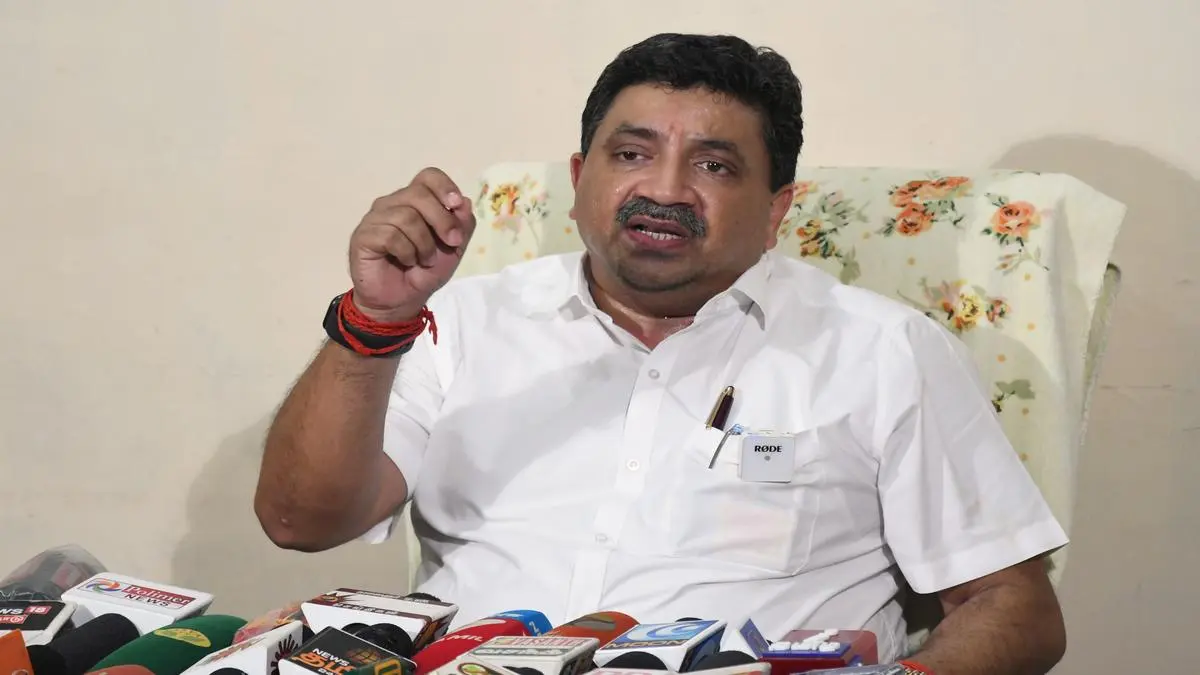

P.T.R. Palanivel Thiaga Rajan, the Minister for Finance and Human Resources Management in Tamil Nadu, is the youngest legislator to hold the position of Finance Minister in the state. Despite initial skepticism from seasoned politicians, Rajan has proven himself by delivering on his promises, questioning the Union government, and criticizing the current taxation system, particularly the goods and services tax. He holds both the Union government and the Reserve Bank of India responsible for the high levels of inflation and urges them to take decisive action to control inflationary tendencies.
In an interview with Frontline, Rajan explains the difference in inflation rates between Tamil Nadu and the national average. He highlights the complexity of inflation, including demand-driven inflation and supply-side shocks. He also emphasizes the impact of oil prices on inflation, as the government passes on the increased costs to consumers, affecting various industries.
Rajan discusses the phenomenon of excess liquidity in the economy and its impact on inflation. He notes that the majority of this liquidity goes to the rich, rather than the middle class and the poor, resulting in limited consumer spending. He also recognizes the challenges of using monetary policy to stimulate economic growth, as liquidity does not necessarily translate into productive economic activity. He points out the recent spike in global inflation due to increased competition for labor and supply-side shocks caused by COVID-19.
When it comes to Tamil Nadu, Rajan attributes the state’s relatively lower inflation rate to the social welfare schemes provided by the government, such as the Public Distribution System (PDS). He also mentions the state’s higher level of consumption, better infrastructure, and supply chains as factors contributing to the mitigation of inflationary effects.
Regarding the state deficit, Rajan claims that they have managed to reduce it significantly, even surpassing the initial estimates. He credits the conservative approach taken by the IAS officers and emphasizes their focus on reducing the revenue deficit without compromising capital works. He acknowledges the constraints faced during the second wave of COVID-19 and adverse weather conditions, which affected the execution of capital works.
In terms of institutional mechanisms to control inflation, Rajan acknowledges the complexity of the issue. He explains the roles of fiscal policy and monetary policy in controlling inflation and discusses the influence of global variables. He emphasizes that fiscal policy has a more significant impact on long-term inflation, while monetary policy focuses on controlling variables contributing to inflation.
Overall, Rajan provides insights into various aspects of inflation and the measures taken by the government to address the issue in Tamil Nadu.